The Emotional Moment Giraffes Hold ‘Funeral’ To Mourn For Member Of Their Herd Who Died During Childbirth That Drove Tourist To Tears

Photographer Callum Perry said: ‘It brought tears to my eyes – seeing the Giraffes’ journey to their fallen friend was one of the most emotional scenes I have ever seen.
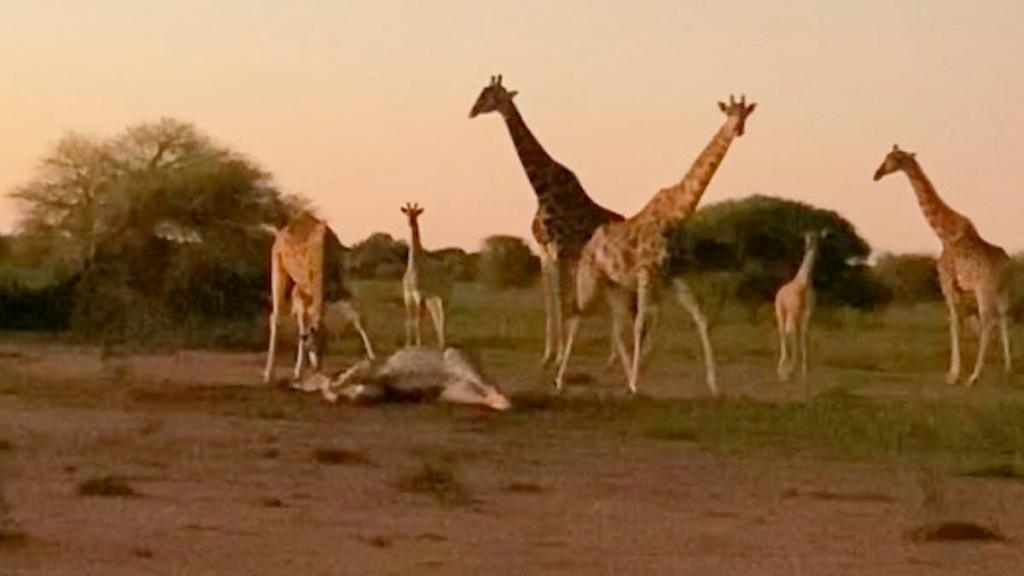
Incredible footage shows the moment a group of Giraffes come to pay their respects to one of their own who died during childbirth. Credit: Callum Perry.

This incredible footage shows the moment a group of Giraffes come to pay their respects to one of their own who died during childbirth.

The group of Giraffes were captured on camera walking towards the corpse in a gathering filled with human emotions as they mourned and said goodbye to a member of their audience.

Photographer Callum Perry, 28, from Britain, who is currently traveling in South Africa, captured the rare moment in the Marataba Contractual National Park.

“The giraffe’s funeral made me take a step back and look at the beauty I’ve seen in my life, and that even in life’s most difficult moments, there can be silver linings.
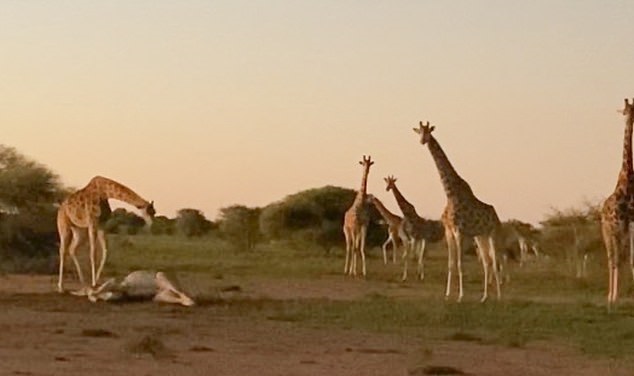
One by one the Giraffes pay their respects. Credit: Callum Perry.

‘I was really fascinated by the emotion of this whole scene; words can hardly do it justice. I feel honored to have been there as they all paid their respects.

“Most of the people I know in the safari industry had never seen this happen before, so they were amazed and a little jealous.”

Photos show a group of more than five Giraffes examining the dead body as it lay on the ground.

In the video, a Giraffe is seen walking towards the dead member of their pack before being followed by others.

Giraffes Mourn The Death Of One Of Their Own Credit: Callum Perry.

One by one, each Giraffe bowed to send its beloved friend away.

Giraffes are thought to mourn their dead, as Zoe Muller, a wildlife biologist from the University of Bristol who founded the Rothschild’s Giraffe Project in Kenya, recalled a moment she witnessed more than a decade ago.

Muller said she saw 17 female Giraffes looking sad and that the pack traveled to a part of the savannah they don’t normally visit.

It turned out that a calf had died and Muller witnessed the group of Giraffes gathering at its mother and staying with her for two days after death.

She interpreted the Giraffes’ behavior as sadness, but she was afraid to say this because some scientists believe the opposite.

She said, as quoted in The National Wildlife Federation: “My personal position has changed. I would now be much more open about acknowledging non-human grief. Giraffes, humans, we are all mammals.

‘Our emotion system is largely driven by hormones, and hormones have probably evolved in the same way in all mammals.’

A similar incident happened to photographer Edward Selfe while tracking Thornicroft’s Giraffes in South Luangwa National Park, Zambia.

He watched over a few days as a herd appeared to ‘mourn’ the loss of one of their number. A female died over complications with pregnancy and was quickly exploited by scavengers. But each day, the rest of the herd would stop and watch as the vultures squabbled and the hyaenas chewed on the remains. It’s anthropomorphism to suggest that it was mourning, but their curiosity certainly extended beyond simply observing something that caught their eye.

A herd of Thornicroft’s Giraffes mourn the loss of one of their number. Credit: Edward Selfe.

WHAT YOU CAN DO TO HELP ANIMALS IN NEED

You can support our work by donating as little as £5 – It only takes a minute but it can last a lifetime for an animal in need.

CLICK HERE TO DONATE PLEASE HELP ANIMALS IN NEED

Everyone who donates will receive a Certificate of Appreciation as a thank you for helping animals in need.

The Mission of Protect All Wildlife is to prevent cruelty and promote the welfare of ALL animals.

We believe EVERY animal should be treated with respect, empathy, and understanding. We raise awareness to protect and conserve wild, captive, companion and farm animals.

It is vital that we protect animals against acts of cruelty, abuse, and neglect by enforcing established animal welfare laws and, when necessary, take action to ensure that those who abuse animals are brought to justice.

This image has an empty alt attribute; its file name is aa-2.webp

Protect All Wildlife are involved in many projects to protect animals’ rights, welfare, and habitats. Money contributed to Protect All Wildlife supports ALL of our worthy programmes and gives us the flexibility to respond to emerging needs. Your donations make our work possible.
Trophy Hunting in Botswana: A Tale Of Declining Wildlife, Corruption, Exploitation And Impoverishment

In May 2019, Botswana’s President Masisi justified the decision to recommence trophy hunting by emphasising that local communities will be guaranteed more than just menial jobs and enjoy sustainable wildlife management’s economic benefits.

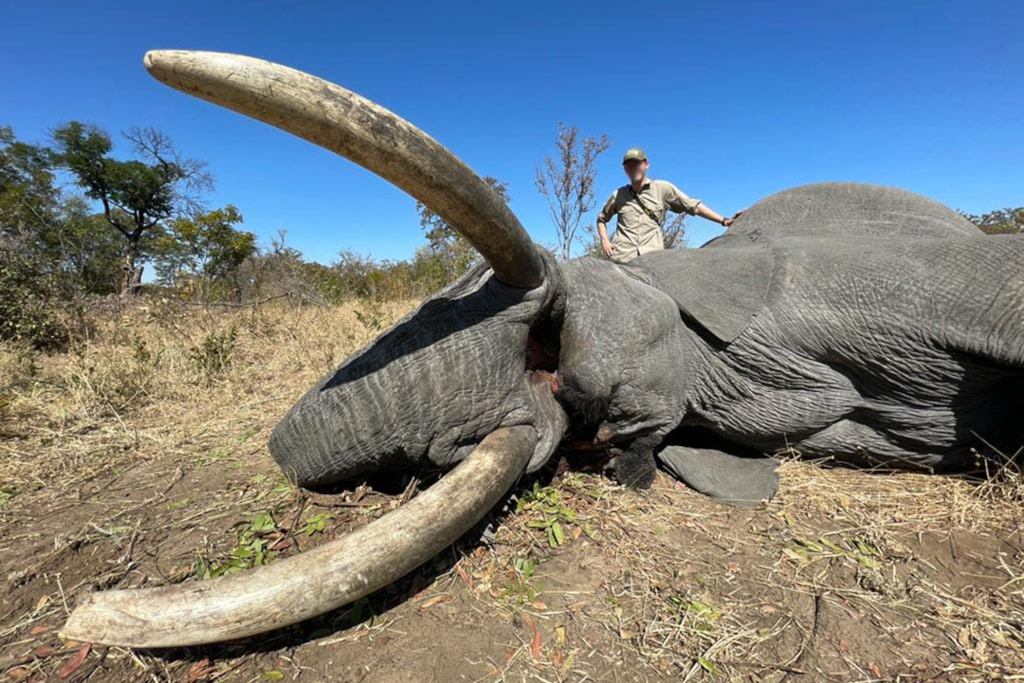
A Bull Elephant shot in Botswana – a so-called ‘100 pounder’.

As the passage of the Hunting Trophies (Import Prohibition) Bill moves to the Committee Stage of the House of Lords, a suite of amendments has been tabled for deliberation. These amendments include amending the Bill from a blanket ban to a case-by-case assessment of trophies imported into the United Kingdom based on whether they contribute to the conservation of wildlife and human economic upliftment.

For example: Amendment Clause 2(d) states that hunting imports may only be granted if:

“a hunting area where the hunting operator can demonstrate that financial or non-financial benefits of trophy hunting materially contributes to the conservation of the trophy hunted species, including habitat protection, anti-poaching measures, and support for community livelihoods.”

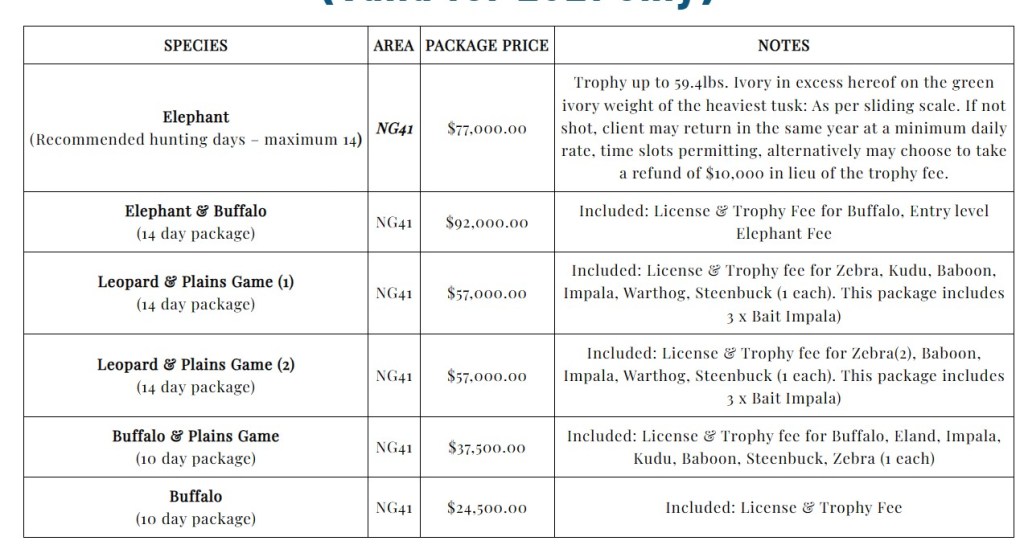
A Shopping List For Trophy Hunters

At face value, this appears to be equitable. Ignoring the obvious ethical dispute, if trophy hunting can be proven to benefit the conservation of wildlife and human livelihoods, then perhaps it may be a case to consider.  However, the problem in the majority of trophy hunting cases, and in most countries where trophy hunting takes place, the activity not only is wholly unable to benefit wildlife and human communities, but precipitates the opposite.

Botswana, one of the major destinations for trophy hunters, is a particular case in point.

The southern African nation has been promoted by some in the House of Lords as an example of a trophy hunting ‘success.’ So much so that a high-level delegation of government officials from Botswana, including a minister, an ambassador and a wildlife department head of authority were invited to the House of Lords in June 2023 to make a case for the benefits of trophy hunting in their country. Yet, serious questions surround Botswana’s ability to adequately regulate trophy hunting and provide any meaningful benefits for communities living among and alongside wildlife.

Field investigations, in-person interviews and literature, financial audit, international policy document reviews have been undertaken over the course of a year to assess the validity that Botswana can provide meaningful and tangible benefits to its wildlife and people. This is a summary of the results:

  • On an international level, the country has been flagged for non-compliance under the Convention on International Trade of Endangered Species of Wild Fauna and Flora (CITES) due to its failure to submit annual reports, which provide crucial information for validating offtake of elephants for trophies for the international trophy trade. This indicates that the wildlife conservation in Botswana is not adequately managed.
  • Hunting quotas are not based on scientific data. A total quota of 356 Elephants and 74 Leopards are on the Wildlife Hunting Quota List for 2023. These figures are regarded as abnormally high. The list also includes Zebra, Buffalo, Ostrich, Wildebeest, Kudu, Eland, Gemsbok, Warthog, Baboon, and Lechwe.
  • There is evidence of widespread unethical hunting practices including over-use of already overly high quotas, fraudulent practices, corruption, baiting, and hunting near and within photographic tourism zones. As well as the deployment of aerial support to search for large tuskers and killing Elephant bulls near artificial waterholes.
  • Trophy hunting activities in Botswana are forcing communities, which are expected to rely on the proceeds of trophy hunting, into a perpetual cycle of impoverishment and economic disenfranchisement. Trophy hunting obstructs the development of more meaningful activities like photographic tourism while the proceeds from trophy hunting are so miniscule that individual community members are practically receiving nothing.
  • There is also widespread evidence of corruption and mismanagement of funds generated by the Community-Based Natural Resource Management (CBNRM) system in areas centred on trophy hunting as the main economic activity. The mismanagement and corruption are directly linked to trophy hunting.
  • The current government has revoked scientific research permits of organisations that have been committed to providing peer reviewed scientific data on the conservation status and ecology of Elephants and suppress those that have dared to voice concern over unsustainable and unethical hunting practices.
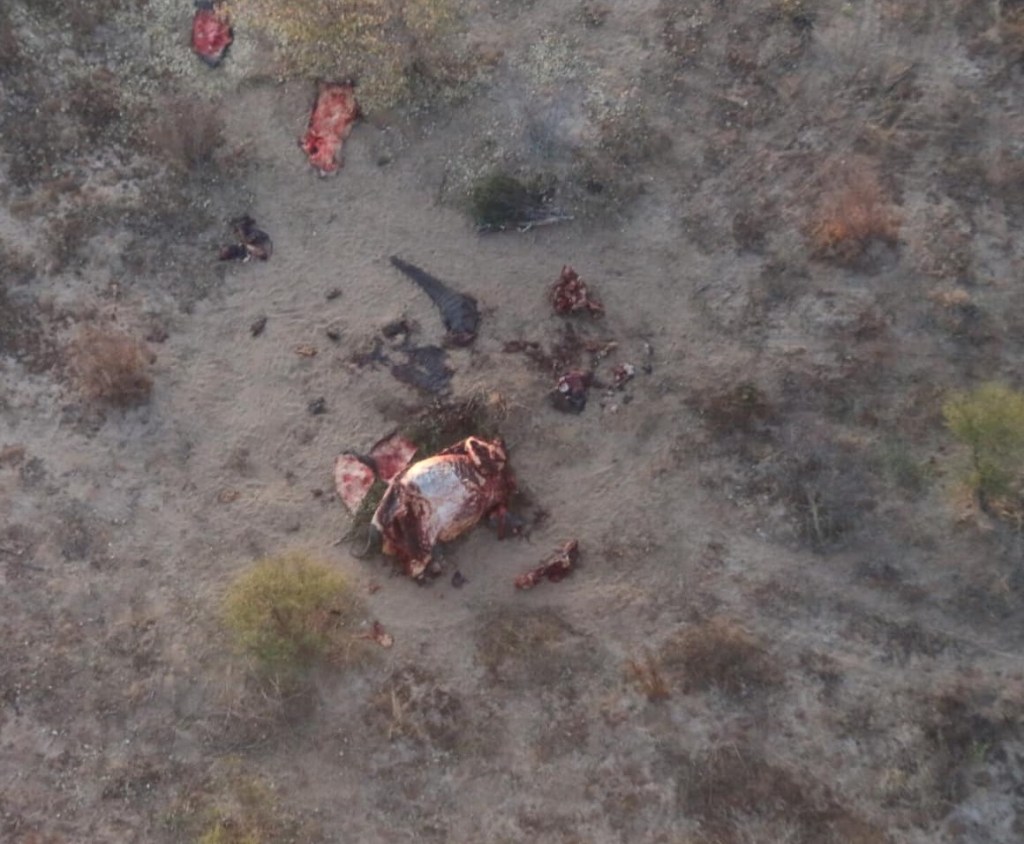
An aerial photograph of a butchered Elephant, shot by trophy hunters in Botswana.

The adult Elephant Bull (above) has been stripped of its body-parts. The trunk has been hacked off. There are large portions of the Elephant’s skin cut off. All four feet have been removed – presumably to make foot / table stools (the Botswana president, Mokgweetsi Masisi, (in)famously gave Elephant foot stools to the presidents of neighbouring countries at an Elephant Management meeting in Kasane in 2019). The tusks and skull have been taken to a taxidermy. These body parts represent the prize – the trophy – that the hunter was after, and which will be displayed on a wall in their home in Europe or America or Asia. There is also some flesh cut off on the flanks of one side, possibly to provide some meat for the trackers and skinners as a ‘tip’.

It has been claimed in Botswana that trophy hunting is only undertaken in ‘marginal’ wilderness areas that are not deemed viable for photographic tourism. It is also claimed that attempts to convert trophy hunting areas not viable for photographic tourism into photographic tourism areas is a challenge. Areas that are deemed not viable for photographic tourism are remoteness, lower densities of wildlife and monotonous natural landscapes. In these spaces, trophy hunting becomes a necessary evil as the sole provider of revenue for remote communities living within and alongside wildlife.

And yet, this Elephant was shot in a hunting concession (NG41) that is neatly wedged between two national parks – Moremi Game Reserve and Chobe National Park. These two parks are globally renowned for photographic tourism and are consequently brimming with tourists wanting to photograph what Botswana showcases best – wildlife. The fact that that this Elephant was shot right in the middle of these tourist hotspots makes a mockery of the claim that trophy hunting in Botswana only takes place in marginal areas.

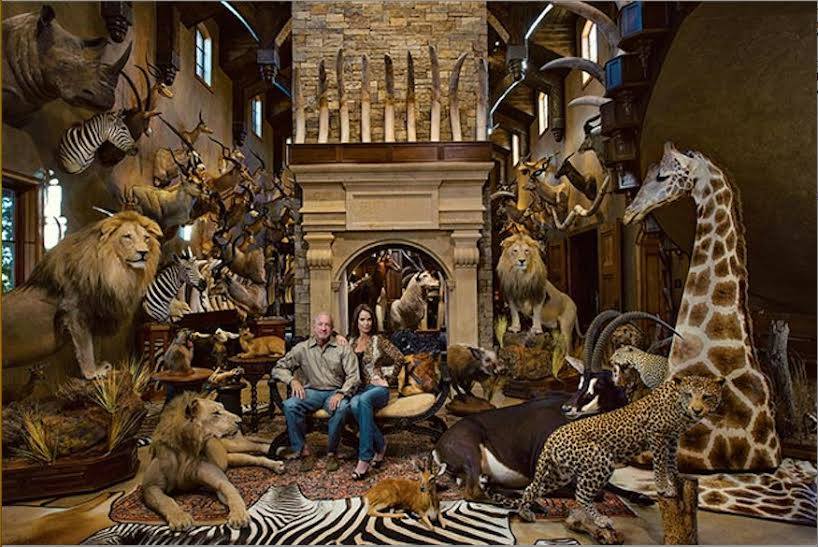
The Wall Of Death: A Hunter’s ‘Trophy’ Room

The standard narrative from hunters and their proponents is that trophy hunting is an essential conservation tool that, if conducted ‘ethically’, preserves endangered wildlife and provides revenue for impoverished communities living in marginalised areas where photographic tourism is absent. Yet as this case shows, as they all do, that narrative is a false one. Stripped of its protective fairy-tale veil, the true face of trophy hunting lays bare, a narcissistic bloodlust of a few depraved individuals who care little for ethics, community upliftment or wildlife conservation. ~ Adam Cruise.

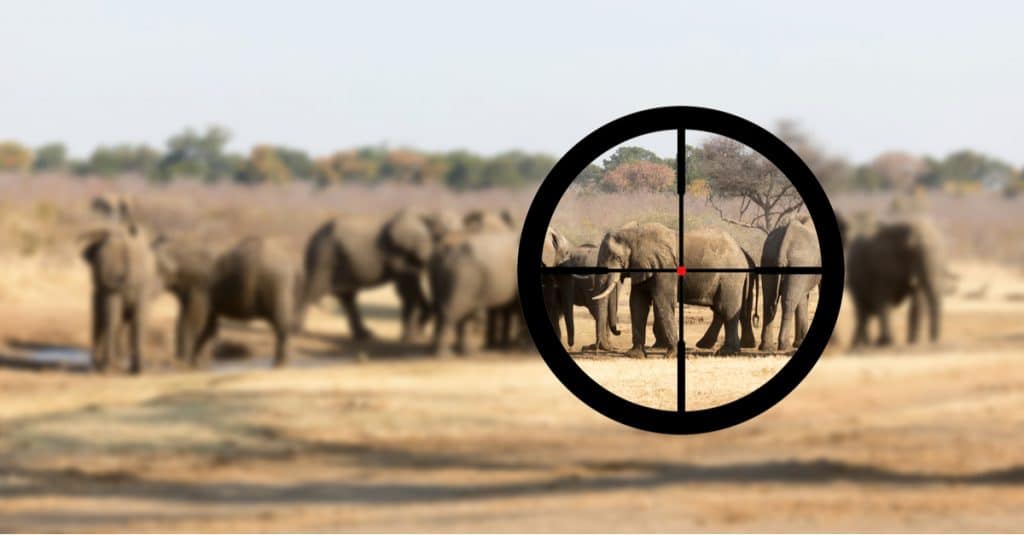
In The Trophy Hunter’s Sights: Botswana’s Elephants

WHAT YOU CAN DO TO HELP WILDLIFE:

You can support ‘Protect All Wildlife’ by donating as little as £1 – It only takes a minute but it can last a lifetime for an animal in need. Please donate below.

Everyone who donates will receive a Certificate of Appreciation as a thank you for helping animals in need.

The Mission of Protect All Wildlife is to prevent cruelty and promote the welfare of ALL animals.

We believe EVERY animal should be treated with respect, empathy, and understanding. We raise awareness to protect and conserve wild, captive, companion and farm animals.

It is vital that we protect animals against acts of cruelty, abuse, and neglect by enforcing established animal welfare laws and, when necessary, take action to ensure that those who abuse animals are brought to justice.

Protect All Wildlife are involved in many projects to protect animals’ rights, welfare, and habitats. Money contributed to Protect All Wildlife supports ALL of our worthy programmes and gives us the flexibility to respond to emerging needs. Your donations make our work possible.
Drought Forces Zimbabwe To Relocate 2,500 Wild Animals To New Reserves

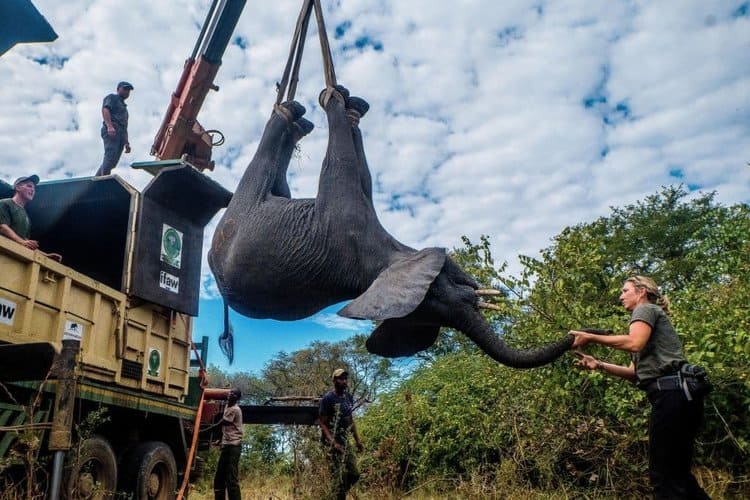
The effects of climate change are outpacing poaching as the No. 1 threat to wildlife. In Zimbabwe, officials are now moving more than 2,500 wild animals from a reserve in the southern part of the country further north due to an ongoing drought. Rangers are relying on trucks, cranes and even helicopters to move the animals from the drought-stricken area.

“Project Rewild Zambezi,” the operation has been dubbed, involves moving animals to the Zambezi River valley, which will also help improve wildlife populations in that area. It is one of the largest live animal relocation projects in southern Africa, with more than 2,000 impalas, 400 elephants, 70 giraffes, 50 each of buffalo, wildebeest, zebras, and elands, 10 lions and 10 wild dogs, among other animals, being moved north.

The animals are being relocated from the Save Valley Conservancy to the Sapi, Matusadonha and Chizarira conservancies in the north. According to officials, the project is necessary to avoid a crisis.

“We are doing this to relieve pressure. For years we have fought poaching and just as we are winning that war, climate change has emerged as the biggest threat to our wildlife,” Tinashe Farawo, spokesperson for the Zimbabwe National Parks and Wildlife Management Authority, told The Associated Press. “Many of our parks are becoming overpopulated and there is little water or food. The animals end up destroying their own habitat, they become a danger unto themselves and they encroach neighboring human settlements for food resulting in incessant conflict.”

One other option was to cull some of the animals to reduce competition for resources among the wildlife, but Zimbabwe has not had a culling since 1987. Conservationists argue that culling is a cruel and unnecessary solution.

The “Project Rewild Zambezi” is one of the largest in Zimbabwe. The country’s last mass relocation of wildlife occurred from 1958 to 1964, as hydro-dam construction led to rising water that ultimately created Lake Kariba. More than 5,000 animals had to be relocated at the time.

Drought is becoming an increasing threat in Zimbabwe and across Africa, reducing food and water available for wildlife, including vulnerable rhinos and giraffes. But hunting and poaching have also taken their toll. In Sapi Reserve, a UNESCO site, wildlife populations quickly declined from the 1950s until 2017, when it was taken over by the non-profit Great Plains Foundation. Relocating animals from areas affected by drought will also help in the foundation’s efforts to rewild and restore populations in Sapi Reserve.

What you can do to help wildlife:

Support ‘Protect All Wildlife’ by donating as little as £1 – It only takes a minute but it can last a lifetime for an animal in need.

We believe EVERY animal should be treated with respect, empathy, and understanding. We raise awareness to protect and conserve wild, captive, companion and farm animals. It is vital that we protect animals against acts of cruelty, abuse, and neglect by enforcing established animal welfare laws and, when necessary, take action to ensure that those who abuse animals are brought to justice.

Protect All Wildlife are involved in many projects to protect animals’ rights, welfare, and habitats. Money contributed to Protect All Wildlife supports ALL of our worthy programmes and gives us the flexibility to respond to emerging needs. Your donations make our work possible. Thank you for your support.
Everyone who donates will receive a Certificate of Appreciation as a thank you for supporting wildlife.

CERTIFICATE OF APPRECIATION

‘The Hunter Was Hunted’: Riaan Naude, Trophy Hunter Who Killed Hundreds Of Wild Animals, Murdered

RIAAN NAUDE WITH SOME OF HIS ‘TROPHIES’

Riaan Naude, a trophy hunter in South Africa known for “proudly” displaying images of himself with innocent animals that he killed for so-called “sport,” has been killed. Naude’s company Pro Hunt Africa has taken the lives of many threatened and endangered species throughout South Africa.

Riaan Naude was a professional hunter denounced by international animal rights organizations due to the large number of wild specimens that died in his hands.

Naude also was heavily involved in breeding and selling Giraffes to numerous customers so that they could later hunt them and serve as personal trophies.

NAUDE ALSO BRED AND SOLD HUNDREDS OF GIRAFFES FOR TROPHY HUNTERS TO ‘HUNT’

Environmentalists Expose Trophy Killing confirmed the news through their Twitter account, stating that Naude was killed while on a hunting trip.

Naude stopped his vehicle on the side of the road approximately 5 km from Mokopane after it overheated, according to the Heritage Protection Group (HPG), a non-profit crime-fighting organization

A second vehicle pulled up next to Naude, and a man shot him in cold blood at close range.

The two suspects got out of the car and stole a gun from Naude, HPG mentions. “The suspects then got into their vehicle and drove in the direction of Marken.”

Police spokesman Lt. Col. Mamphaswa Seabi said that when police officers arrived at the scene, they found the lifeless body next to his vehicle.

Police found two hunting rifles, clothing, water, whiskey, and pyjamas in the victim’s vehicle. The motive for the murder is unknown currently.

Users celebrate the death of Riaan Naude

The news has gone viral on social media and many cybernauts celebrated the killing, arguing that it was an act of justice for the animals.

“Hunter hunted. There is party in animal heaven. I’m not happy, but animals should not be anyone’s trophy; they should live and survive in their habitat naturally,” wrote a user in response to Expose Trophy Hunts tweet.

“No more abusing defenceless animals,” commented another user.

When I look at this picture (of Naude holding a Lion) I can’t feel sorry for him.

Death is the hardest thing to bear and I think of his family. However this magnificent lion in the picture also died…why turn a beautiful mature lion into a lifeless trophy? said another.

Truly, a tragedy. Why is it always the good ones that get taken from us so soon? My deepest sympathies to this poor lion’s family. said another

Why was he executed?

Although the authorities are working on the case, the hypothesis they are handling is the “high level of hatred that the locals had for the hunter, due to the enormous number of animals he killed.”

PROTECT ALL WILDLIFE

We believe EVERY animal should be treated with respect, empathy, and understanding. We raise awareness to protect and conserve wild, captive, companion and farm animals.It is vital that we protect animals against acts of cruelty, abuse, and neglect by enforcing established animal welfare laws and, when necessary, take action to ensure that those who abuse animals are brought to justice.

Protect All Wildlife are involved in many projects to protect animals’ rights, welfare, and habitats. Money contributed to Protect All Wildlife supports ALL of our worthy programmes and gives us the flexibility to respond to emerging needs. Your donations make our work possible. Thank you for your support.
Go back

Your message has been sent

Warning
Warning
Warning
Warning
Warning
Warning.

What Trophy Hunting Does To The Elephants It Leaves Behind

Trophy Hunters Slaughter An Elephant In Zimbabwe

There was outrage when the U.S. Fish and Wildlife Service announced that the remains of Elephants legally hunted in Zimbabwe and Zambia could now be legally imported to the United States as trophies.

This new policy overturned a ban put in place by the Obama administration in 2014. African Elephants are considered “threatened” under the U.S. Endangered Species Act, a step below being endangered. The animals’ numbers have plunged from around 10 million 100 years ago to around 400,000 today, largely because of poaching and habitat loss. The Fish and Wildlife Service has not changed the Elephants’ status; instead, it now argues that supporting “legal, well-managed hunting programs” will help provide “much-needed conservation dollars to preserve habitats and protect wild herds” in Zimbabwe and Zambia, the agency’s principal deputy director, Greg Sheehan, said in a news release.

But then, to further complicate matters, President Donald Trump tweeted Friday evening that nothing would actually change until he “reviews all conservation facts.”

The idea that killing more elephants will help save the species is counterintuitive, and its line of reasoning is difficult for many conservation organizations to support: Let rich hunters pay hefty sums to shoot elephants, and use the money to help conservation efforts and local communities. Supposedly, the villagers won’t then need to poach elephants to feed their families and pay their kids’ school fees. Still, the International Union for Conservation of Nature, or IUCN, a respected organization that sets the conservation status for all species, supports the notion.

But the evidence that “hunting elephants saves them” is thin. The hunting-safari business employs few people, and the money from fees that trickles down to the villagers is insignificant. A 2009 report from the IUCN revealed that sport hunting in West Africa does not provide significant benefits to the surrounding communities. A more recent report by an Australian economic-analysis firm for Humane Society International found that trophy hunting amounts to less than 2 percent of tourism revenue in eight African countries that permit it.

And then, there is a larger moral question: How does hunting affect male elephants, especially the “big tuskers” that hunters want, and the overall population?

If elephants are recognized as legal persons, a term the U.S. courts have granted corporations, it would be more difficult to hunt them at all—let alone import their body parts. Wise’s lawsuit cites extensive scientific studies that have established elephants’ cognitive abilities, emotional and empathetic natures, complex social lives, lifelong learning, and memory skills. “Taken together, the research makes it clear elephants are autonomous beings who have the capacity to choose how to live their lives as elephants,” he tells me.

German Trophy Hunter Rainer Schoerr Proudly Poses With One Of The Biggest ‘Tuskers’ Ever Slaughtered In Zimbabe

One thing elephants would not choose, Wise and elephant researchers agree, is to be hunted. “It doesn’t matter to elephants if they are killed by poachers or trophy hunters,” says Joyce Poole, who has studied African elephants in the wild in Kenya and Mozambique for more than 40 years and is the codirector of ElephantVoices, a conservation organization. “Either way, you’re a killer. And if elephants understand that about you, they change their behavior.”

Elephants aren’t considered game animals in most African countries with substantial populations of these animals. But trophy hunters after large male elephants can seek their prey in South Africa, Namibia, Cameroon, Zambia, Zimbabwe, Tanzania, Gabon, and Mozambique. Kenya banned the sport in 1973, while Tanzania continued to permit legal hunting. That caused problems for the elephants of Kenya’s Amboseli National Park, says Poole, who was studying the large males in the park at the time. The park borders Tanzania, and after the Tanzanian government opened a hunting block on the opposite side, the Amboseli male elephants who wandered across became prized targets.

“It was an awful time,” Poole recalled, “because on one side, the elephants learned to trust tourists—generally white people—in cars. From our studies, we know they can smell the difference between whites and local people. They also distinguish us by our languages. They know people who speak Maa, the language of the local Maasai people, may throw spears at them; those who speak English don’t.” However, the tables were turned on the Tanzanian side of the border. There, white people in cars who drove up close to see an elephant might lean out with a camera—or a rifle.

“The elephants didn’t run because they didn’t expect to be shot,” Poole said. Two of the large males she was studying were lost this way to trophy hunters. She and others protested to the Tanzanian government, and these particular hunting blocks were eventually closed.

Poole does not know how the loss of these big males, who’d fathered many calves, affected the other elephants. Female elephants, though, do mourn family members who die, and are especially troubled when the matriarch, their leader, passes. In 2003, for instance, researchers in Kenya’s Samburu National Reserve watched as Eleanor, an elephant family’s matriarch, died from natural causes. When Eleanor fell heavily to the ground, Grace, a matriarch from another family, used her tusks to lift her friend and helped her to her feet. Despite Grace’s efforts, Eleanor died that night. She had a tiny, six-month-old calf who never left her side. In a photograph, the calf stands like a small sentinel beside her mother’s body, while the rest of the family bunches together, grieving.

Researchers have rarely seen similar moments among male elephants, who as adults, live away from the female herds they grew up in, and return only to mate. That behavior led to a “myth that males are far less social than females,” said George Wittemyer, a conservation biologist at Colorado State University in Fort Collins who has studied elephants in Kenya for more than 20 years. His new research contradicts this notion. “Actually, the males are always in groups and have preferences for certain companions. They’re not the loners they’ve been made out to be,” he said.

“The death of a bull will cause less disruption than the death of a family member,” said Iain Douglas-Hamilton, a zoologist who founded the organization Save the Elephants. “If a bull is shot while associating with a family the others will normally run away.” But he noted: “Bulls will defend or help each other sometimes, when one is down.”

From a population standpoint, “older male elephants are very important to the health and genetic vitality of a population,” said Cynthia Moss, who has led the Amboseli Elephant Research Project in Kenya since 1972. While hunters in the past have used the belief that older males are reproductively senile as an argument for killing them for their ivory, research has revealed that they are in fact an elephant population’s primary breeders. “By living to an older age, [older males show that] they have the traits for longevity and good health to pass on to their offspring,” Moss said. “Killing these males compromises the next generation of the population.”

It’s not clear if the Fish and Wildlife Service will consider how trophy hunting affects individual elephants or their families. The agency didn’t comment on Trump’s tweet when contacted, but later issued a public statement confirming that permits would be put on hold. “President Trump and I have talked and both believe that conservation and healthy herds are critical,” Interior Secretary Ryan Zinke said in the statement.

Wise believes that the emotional and psychological suffering the elephants endure from this sport is obvious. “One day it will be seen for the moral outrage that it is,” he said.