Terrifying Moment Two Orcas Swim With Feet Of Two Children In New Zealand’s Enclosure Bay…But The Children Were Safe!!!

Two Orcas were seen swimming close to the children in a bay in New Zealand. The footage, captured by a local resident at Enclosure Bay in Waiheke Island, shows the kids frantically trying to swim away as the Orcas head straight to them.

The massive beasts can be seen swimming within feet past the youngsters and out to sea. The filmer writes: ”While in Auckland’s Waiheke Island at Enclosure Bay two orca whales entered the bay. ”At first all I saw was a fin in the water and thought a shark had entered the bay. I realised it was a whale and not a shark. ”Everyone got out of the water, however, there were two children in the middle of the bay who must not have heard the call to get out. ”By the time they realised what was going on it was too late, it appeared the whales heard the children calling for help and headed directly for them”

In the clip below, you see a pair of dorsal fins rip through the ocean at pace as they head towards the kids.

The Orca Pass Within Feet Of The Children

The children panic and cling on to each other for dear life.

You also hear them scream as they believe they are about to be devoured by the predators, which can measure up to 8 metres in length and weigh up to 6 tons.

“That’s a lifetime experience for you,” one onlooker could be heard saying as the two orcas swam past the children and back out to sea.

”It was extremely frightening for both onlookers and the children in the water that came face to face with these massive Orcas.”

Killer whales rarely attack humans

Attacks on humans by wild killer whales are rare and are usually blamed on the animals mistaking people for prey. Attacks on wild killer whales by humans were, until recently, far more common and governments encouraged their shooting because of the competition for fish.

Killer whales in captivity seem more of a threat, and there have been a reported two dozen or so attacks on handlers or pool intruders since the 1970s.

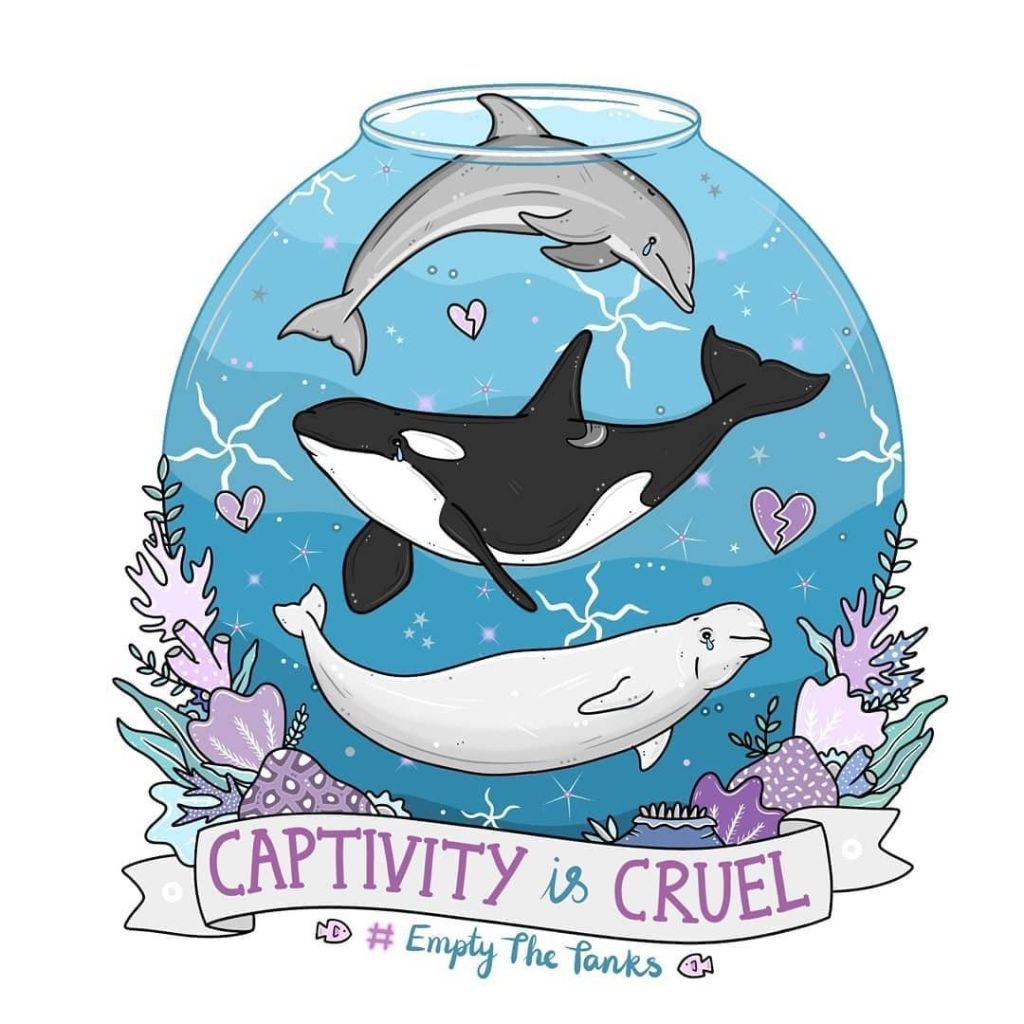
In Memory Of Kiska, An Orca Imprisoned At Marineland And The Last Captive Orca In Canada, Who Swam Alone In Her Tank For More Than A Decade.

Kiska, the Orca dubbed the “World’s Loneliest Whale,” died recently after 44 years in captivity. Her life was a tragic one, and her death could be seen as a sort of release. She was believed to be 47 years old, although her exact age isn’t positively known. She was the last captive Killer Whale in Canada.

In 1979, when Kiska was three years old, she was caught in Icelandic waters and taken to MarineLand, a theme park in Niagara Falls, Ontario, Canada. Kiska was captured along with Keiko, the whale made famous in the movie Free Willy, and for a few years in the ’80s, the pair shared a pool. Kiska spent 40 years there, swimming in a concrete tank.

For the last 12 years of her life, Kiska was alone in her tank. Orcas are social animals that live in tight-knit pods, hunting together and communicating with each other. Her tank at MarineLand was bare and featureless, and her depression was caught on film recently in a hard-to-watch video that went viral.

Kiska’s death comes four years after Canada passed bill S-203, banning the captivity and breeding of Whales, Dolphins and Porpoises. Although the new law was too late for Kiska – individuals already in captivity were excluded from protection – activists say her story was instrumental in drawing public attention to the plight of captive marine mammals.

In one of the last recorded videos of her, she drifts listlessly in aquamarine water as a boy behind the glass wall tries to get her attention. “Kis-kaaa! Kis-kaa! Kis-kaaa!” he calls as the Whale floats by, seemingly oblivious.

The heartbreaking footage below shows Kiska floating listlessly and hurling herself against the walls of her cramped tank. This unnatural behaviour was the result of stress, frustration, distress, and loneliness caused by cruel confinement.

Kiska’s harrowing story is not unique – around the world, Orcas just like her are languishing in marine parks so that humans can gawk at them and watch them do demeaning tricks.

Help end their suffering. Speak out against the exploitation of Whales and Dolphins in tourism.

WHAT YOU CAN DO TO HELP WILDLIFE:

You can support ‘Protect All Wildlife’ by donating as little as £1 – It only takes a minute but it can last a lifetime for an animal in need. Please donate below.

Everyone who donates will receive a Certificate of Appreciation as a thank you for helping animals in need.