Istanbul Police Bust Wildlife Trafficking Ring As Raid On Illicit Wildlife Museum Reveals Stuffed Endangered Animals Worth $2.3m

Some of the animals illegally killed by Ali Haydar Ustay. Credit: Istanbul Police Department’s Anti-Smuggling and Organized Crime Branch

In an operation conducted in the districts of Sarıyer and Arnavutköy in Istanbul, over 400 taxidermied specimens of protected wild animals were confiscated. The suspect, 85-year-old Ali Haydar Ustay, who established a private museum by hunting animals domestically and internationally, has been apprehended.

During the raid conducted on Wednesday at the identified addresses, over 400 pieces of processed ornamental items and taxidermied animals were seized. New details emerged during the operation, revealing that taxidermied specimens and trophies of wildlife were present. Consequently, Ali Haydar Ustay was apprehended as a “suspect.” During the searches conducted at the addresses, various types of stuffed animals were seized, including Deer, American Antelope, Bison, Jaguar, Crocodile, Bear and Mountain Goat, with an approximate market value of TL 75 million ($2.3).

More of the animals seized by the Istanbul Police Department’s Anti-Smuggling and Organized Crime Branch.

The raid was the final step in detailed physical and technical tracking and resulted in the seizure of over 400 specimens, including species protected under the Convention on International Trade in Endangered Species of Wild Fauna and Flora (CITES).

The haul features taxidermied Polar Bears, Crocodiles, Lions, Jaguars, Cheetahs, Bison, and a notable Mammoth tusk. Authorities have valued the collection at a staggering $2.3 million.

Ustay, known for his extensive hunting expeditions, travelled to 30 countries on six continents to amass his collection. He illegally transported the animals into Turkey via his private aircraft.

The Polar Bear killed by Ali Haydar Ustay. Credit: Istanbul Police Department’s Anti-Smuggling and Organized Crime Branch.

He went to extraordinary lengths to pursue his prey, including a two-week stint in a tree for a Striped Deer and a two-month stay in Canada for a Polar Bear.

The most egregious of his acts include the hunting and killing of the last known Anadolu Tiger in Turkey. “This is not just a crime against nature but a direct assault on our national heritage and biodiversity,” said a General Directorate of Nature Conservation and National Parks spokesperson.

The skin of the last known Anadolu Tiger in Turkey. Credit: Istanbul Police Department’s Anti-Smuggling and Organized Crime Branch.

The discovery of the Tiger’s skin in Ustay’s collection has stirred a wave of outrage among wildlife activists and conservationists.

Authorities have commenced the process of handing over the seized items, including trophies, skins, and other artifacts, to the Directorate of Nature Conservation and National Parks. Ustay is currently undergoing interrogation for his alleged crimes.

WHAT YOU CAN DO TO HELP WILDLIFE

You can support ‘Protect All Wildlife’ many projects by donating as little as £5 – It only takes a minute but it can last a lifetime for an animal in need. Please donate below.

Donate Here: Please Help Animals In Need

Everyone who donates will receive a Certificate of Appreciation as a thank you for helping animals in need.

The Mission of Protect All Wildlife is to prevent cruelty and promote the welfare of ALL animals.

We believe EVERY animal should be treated with respect, empathy, and understanding. We raise awareness to protect and conserve wild, captive, companion and farm animals.

It is vital that we protect animals against acts of cruelty, abuse, and neglect by enforcing established animal welfare laws and, when necessary, take action to ensure that those who abuse animals are brought to justice.

Protect All Wildlife are involved in many projects to protect animals’ rights, welfare, and habitats. Money contributed to Protect All Wildlife supports ALL of our worthy programmes and gives us the flexibility to respond to emerging needs. Your donations make our work possible.
Donate Here: Please Help Animals In Need

In What Way Can This Be Considered Educational: Polar Bears In The Zoo

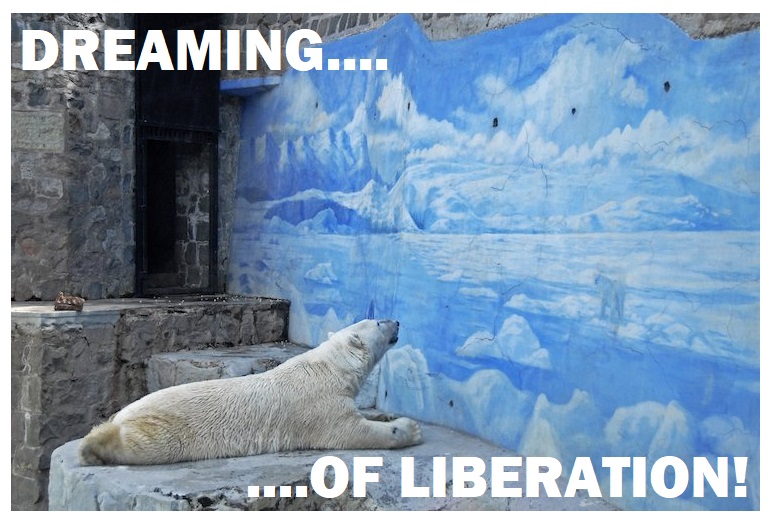
Sadly, unhealthy and dreary polar bear enclosures such as this still exist. Chile’s only polar bear “Taco” died in 2015 at the age of 18 at the National Zoo in Santiago. For years, activists protested its captivity, sometimes with blockades and burning barricades. [Photo by Aldo Fontana]

In urban areas of the western hemisphere, polar bears have lived in our midst since the Middle Ages—a result of our fascination with these charismatic carnivores. As early as 1252, Henry III of England kept a muzzled and chained polar bear, which was allowed to catch fish and frolic about in the Thames. The first undisputed documentation of polar bears in Europe shows that the bears arrived by way of Greenlandic Norse traders and from Iceland, where sea currents still sometimes maroon them. Viking entrepreneurs distributed them to royalty throughout Europe, who kept them in ostentatious menageries or passed them on as gifts to grease diplomatic gears and careers.

Beginning in 1693, the first King of Prussia, Frederick I, kept a polar bear and other large mammals for public amusement in a baroque-style hunting enclosure inspired by Roman arenas. These rare animals were too valuable to be killed but, defanged and de-clawed, were pitted against each other in faux fights. During medieval times in England, entertainers displayed all sorts of animals at carnivals and fairs. The traveling menagerie, which derived from the processions of Europe’s ambulatory monarchs and their entourages, first took to the roads at the turn of the eighteenth century. In a bid for respectability, the owner of one bragged he was doing “more to familiarize the minds of the masses of our people with the denizens of the forest than all the books of natural history ever printed.”

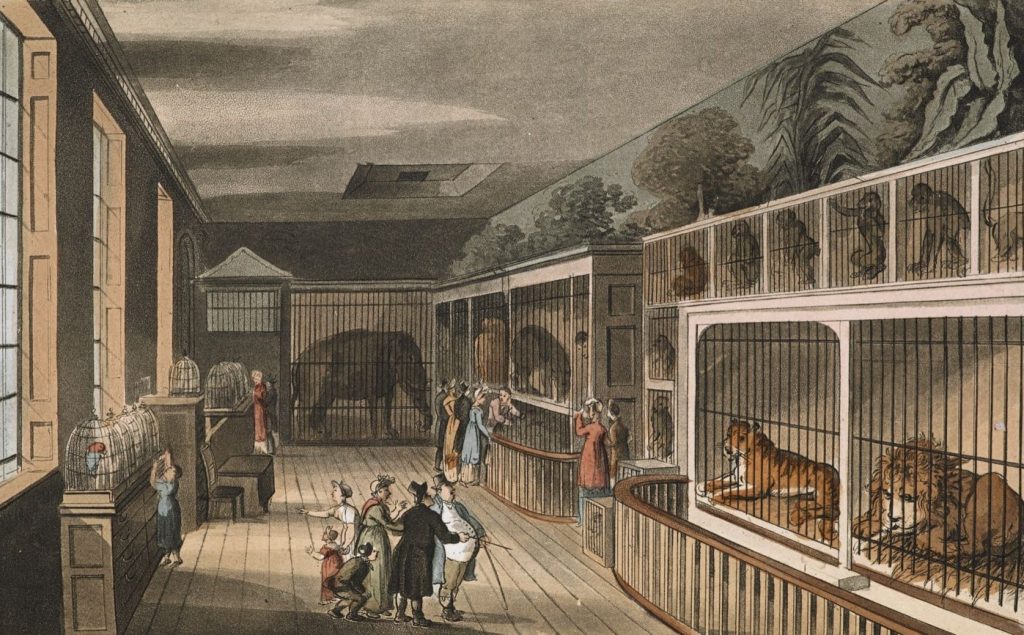
Around this same period of time, a burgeoning middle class and expeditions to the Americas, Asia, and Africa, as well as new developments in science and philosophy, brought about changes in how polar bears were displayed. Animal collections in Europe—until then largely a privilege of nobility—increasingly welcomed the public. Featured in these publicly accessible collections, polar bears drew a good deal of attention, just as they did in medieval wildlife collections or “menageries” (such as the one in the Tower of London).

The Royal Menagerie: An illustration of how the zoo within the Tower looked in 1816

Nobody contributed more to the popularity of captive polar bears or the looks of modern zoos than Carl Hagenbeck. In 1848, Carl Hagenbeck Sr., a Hamburg fishmonger, exhibited six seals he’d received as bycatch from fishermen before selling the seals at a handsome profit. At age fifteen, Carl Hagenbeck Jr. took over what would become Europe’s most famous animal-trade business. He soon supplied zoos, menageries, and wealthy individuals, including the Kaiser. In his early twenties, Hagenbeck already ranked among Europe’s top dealers in exotics. With a nose for opportunity, he branched out into the budding entertainment industry, mounting “ethnological” and large carnivore shows as well as a circus.

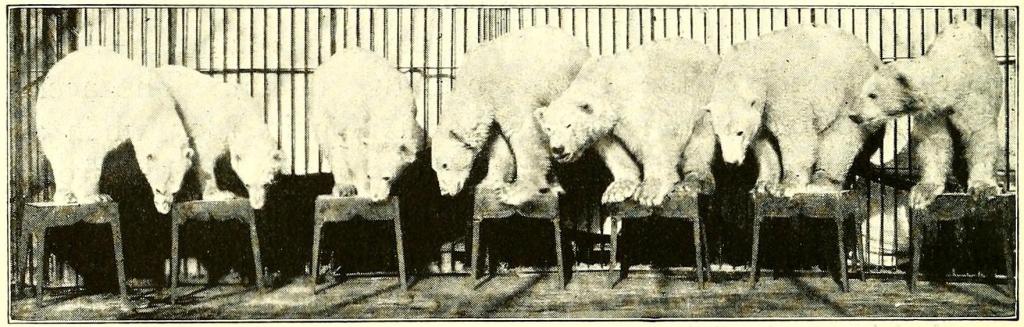
Some of the Polar Bears abducted by the Hagenbecks faced a fate worse than zoo captivity. These seven polar bears were forced to become performers by Carl’s relative Wilhelm Hagenbeck. 

From their very beginnings as cultural institutions, zoos have tried to balance entertainment and education. Today, with climate change and habitat loss from development threatening the polar bear’s natural habitat, many zoos have added conservation to their mission, contributing to captive breeding programs and scientific research.

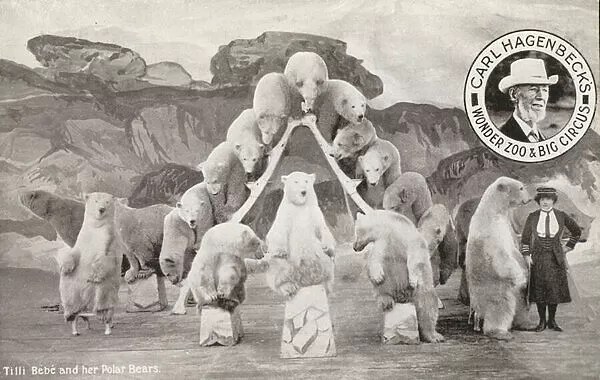
Austrian circus performer Mathilde Rupp (stage name Tilly Bébé) and her Polar Bears at Carl Hagenbeck’s Wonder Zoo in 1918.

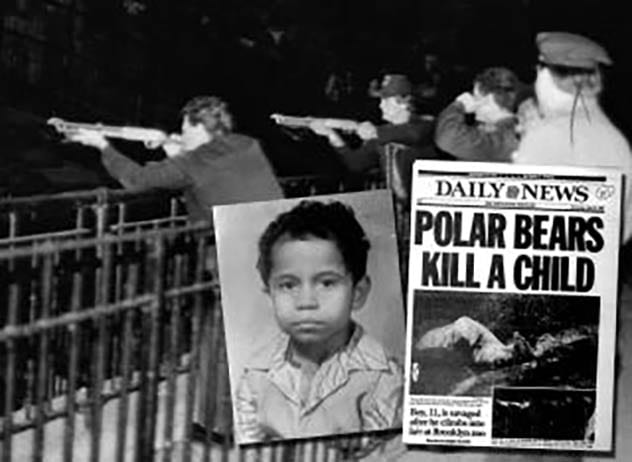
The urge to be close to the wildness (fettered as it may be) that cannot be bred out of zoo polar bears, or perhaps a desire to better get to know these ursine celebrities, has caused numerous incidents at zoos. Such trespassing is not a recent phenomenon. In 1891, a female servant from Bavaria, Karoline Wolf, climbed down a rope into the Frankfurt Zoo’s bear pit—after undressing and neatly folding her clothes—in order to be “eaten alive by a white bear.” People will forever seek operatic ways to end their lives, but accidental zoo maulings are telling because of what these incidents reveal about attitudes toward the animal. In 1987, two polar bears at the Brooklyn Zoo dragged into their den and then killed eleven-year-old Juan Perez, who had entered the enclosure after hours on a dare. The boy thought the bears were slow and afraid of people and water. After invading their space, he provoked the female, throwing bottles and sticks. Police, who suspected that more kids were in danger, riddled both bears with shotgun slugs and pistol bullets.

On May 19, 1987, 11-year-old Juan Perez and two of his friends were visiting the Prospect Park Zoo in Brooklyn, New York, after the zoo had closed for the day.

The old animal magic, that attraction of people to bears, remains strong. Drawn like foxes to a bear kill, we take risks to breach barriers that once, long ago, did not exist. Juan Perez’s death and similar cases recall an Inuit boy’s test of courage and coming-of-age rite: his first polar bear kill. The crucial difference, of course, is the cultural context. Whereas Inuit children grew up listening to their elders, respecting the animal, observing bear habits and how bears are hunted, young Juan had never been inducted into the White Bear’s ways.

A Polar Bear riding a motorcycle circa 1960. (Photo by John Cuneo)

——–((((((()))))))——–

WHAT YOU CAN DO TO HELP WILDLIFE:

You can support ‘Protect All Wildlife’ by donating as little as £1 – It only takes a minute but it can last a lifetime for an animal in need. Please donate below.

Everyone who donates will receive a Certificate of Appreciation as a thank you for helping animals in need.

The Mission of Protect All Wildlife is to prevent cruelty and promote the welfare of ALL animals.

We believe EVERY animal should be treated with respect, empathy, and understanding. We raise awareness to protect and conserve wild, captive, companion and farm animals.

It is vital that we protect animals against acts of cruelty, abuse, and neglect by enforcing established animal welfare laws and, when necessary, take action to ensure that those who abuse animals are brought to justice.

Protect All Wildlife are involved in many projects to protect animals’ rights, welfare, and habitats. Money contributed to Protect All Wildlife supports ALL of our worthy programmes and gives us the flexibility to respond to emerging needs. Your donations make our work possible.
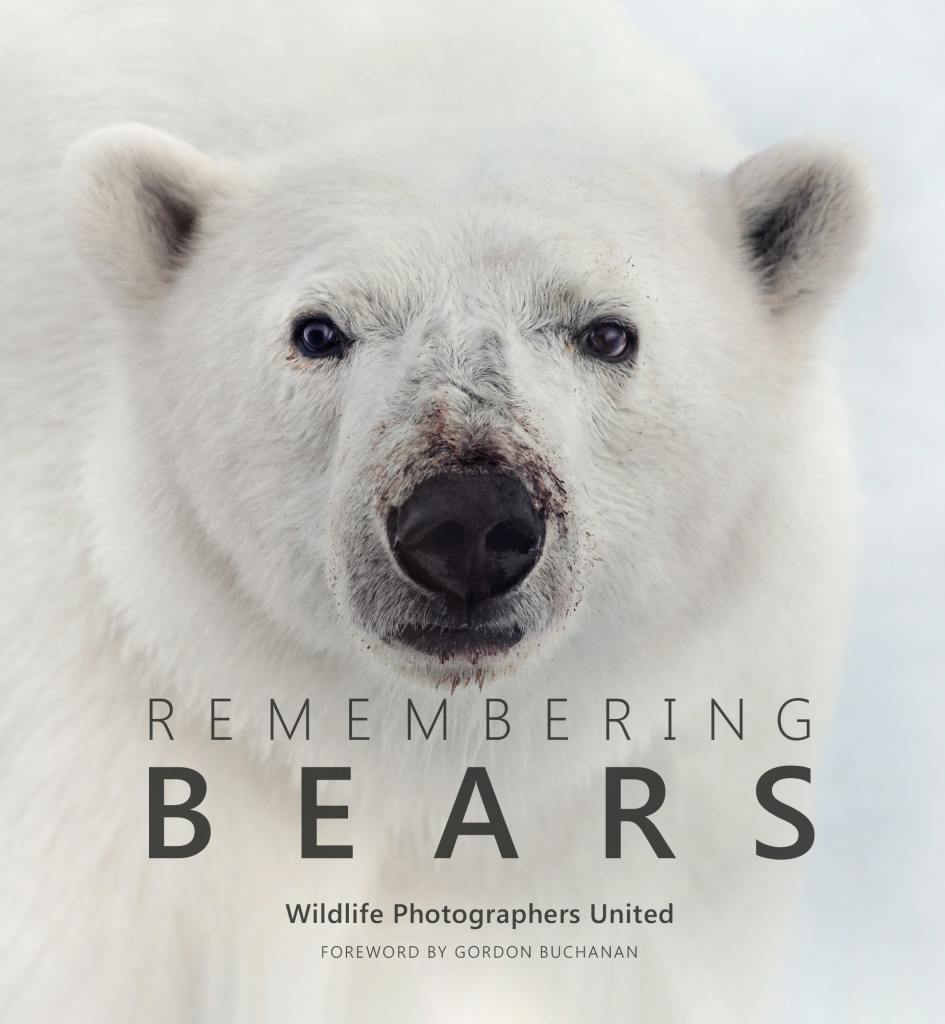
Remembering Wildlife, Remembering Bears. A Review Of The Book Raising Funds For The Protection Of Bears.

“The greatness of a nation and its moral progress can be judged by the way its animals are treated” ~ Mathatma Gandhi.

A new book aims to raise awareness of the plight facing Bears and to raise money to protect them. This is the latest book in the Remembering Wildlife series which has so far raised more than £952,000 for conservation through book sales around the world.

“There can be few species that we humans have such a contradictory relationship with, than Bears. From hugging toys of them at night as children, to labelling them as anything from a nuisance to a threat, entertainment to medicine, we are nothing but hypocritical in how we relate to this most awe inspiring creature. At Remembering Wildlife, we believe it is time to stop and think about this contradiction.

As you’ll see in this stunning collection of images, the eight Bear species roam from ice sheets to forests, meadows to mountains. From tender moments with their young, to fierce territorial battles between males, we tell their story in a way that commands respect, awe and reappraisal.

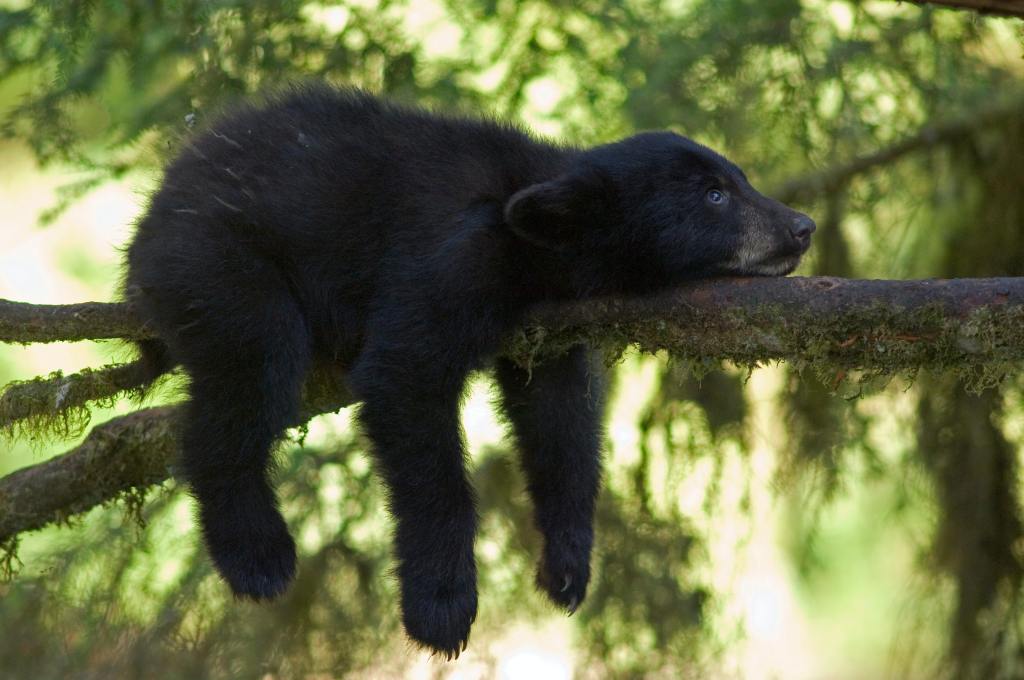
American Black Bear (Ursus Americans) by Amy Gulick Tongass. National Forest, Alaska This Black Bear cub was sent up a tree by its mother for safekeeping while she fished in the stream below. It was an unusually hot day and the cub flopped out on the branch until mom gave the signal to come down for a meal.

With this book, we aim to shine a spotlight on their diversity and beauty, their resilience and fortitude and most importantly, to raise funds for those working to protect them. We are supported in this mission once again by many of the world’s top wildlife photographers, who have all generously donated their work. Together, we are determined to stand up for Bears and penetrate the moral consciousness of all those who would exploit or see them destroyed. Because the planet would be poorer without them” – Margot Raggett, Remembering Wildlife Founder.

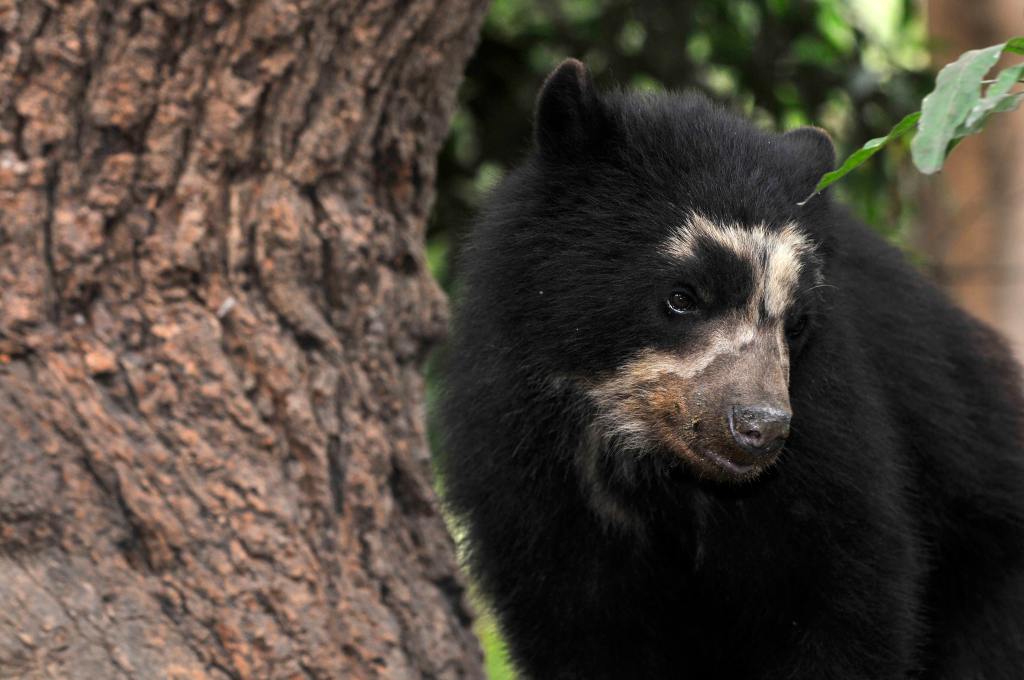
Chaparri Ecological Reserve, Peru Andean Bear. Photographer Daniel Rosengren was visiting a bear sanctuary in Chaparri when suddenly this wild bear appeared and climbed a tree. Staff explained it visited sometimes and was not shy.

All profits from the sale of the book will be used to support projects working to protect Bears.

Each turn of the page reveals another striking image of one of the eight Bear species –American Black Bear, Andean Bear, Asiatic Black Bear, Brown Bear, Giant Panda, Polar Bear, Sloth Bear and Sun Bear – revealing tender moments with family members, fierce territorial battles and the harsh reality of life as a bear, for example, when searching for food.

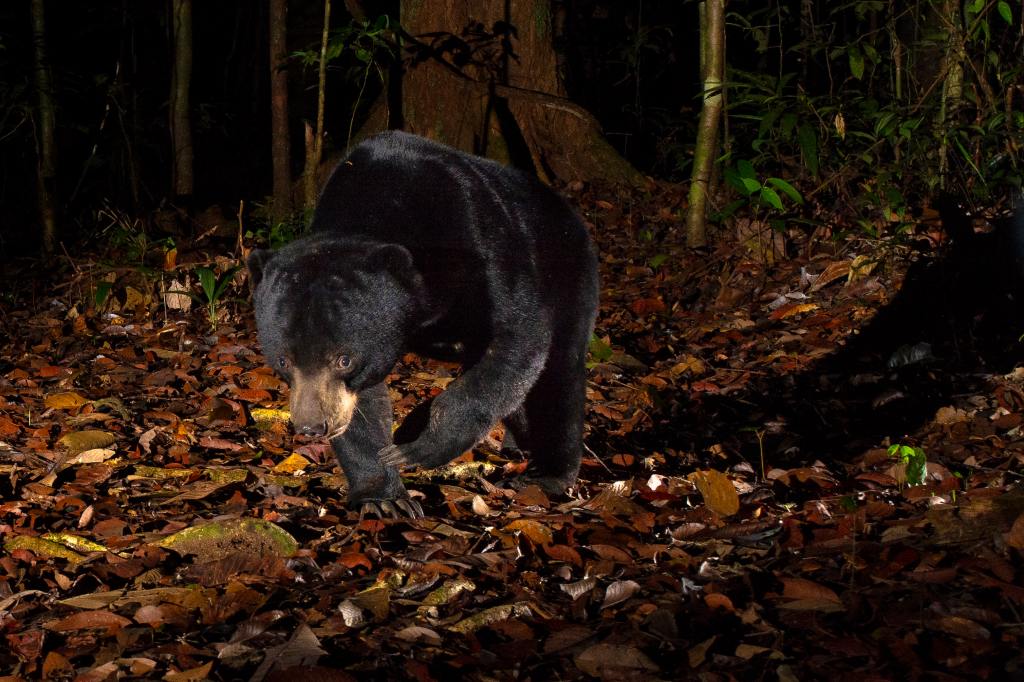
Sun Bear (Helarctos malayanus) by Tim Laman Gunung Palung National Park, West Kalimantan, Indonesia Sun Bears are rare, and this image was one of a handful of obtained during two years of intensive camera trapping, deep in the remote rainforest of Gunung Palung National Park in Indonesian Borneo.

Actor and comedian Ricky Gervais has endorsed the book, saying it is: “A wonderful book that shows how beautiful Bears are and just what we have to lose if we don’t stand up for them now. They deserve better.”

The hardback coffee table book is a collection of 88 stunning images taken by the world’s top wildlife photographers – including Marsel van Oosten, Art Wolfe, Frans Lanting, Greg du Toit and Daisy Gilardini – who have generously donated images to help protect Bears in the wild.

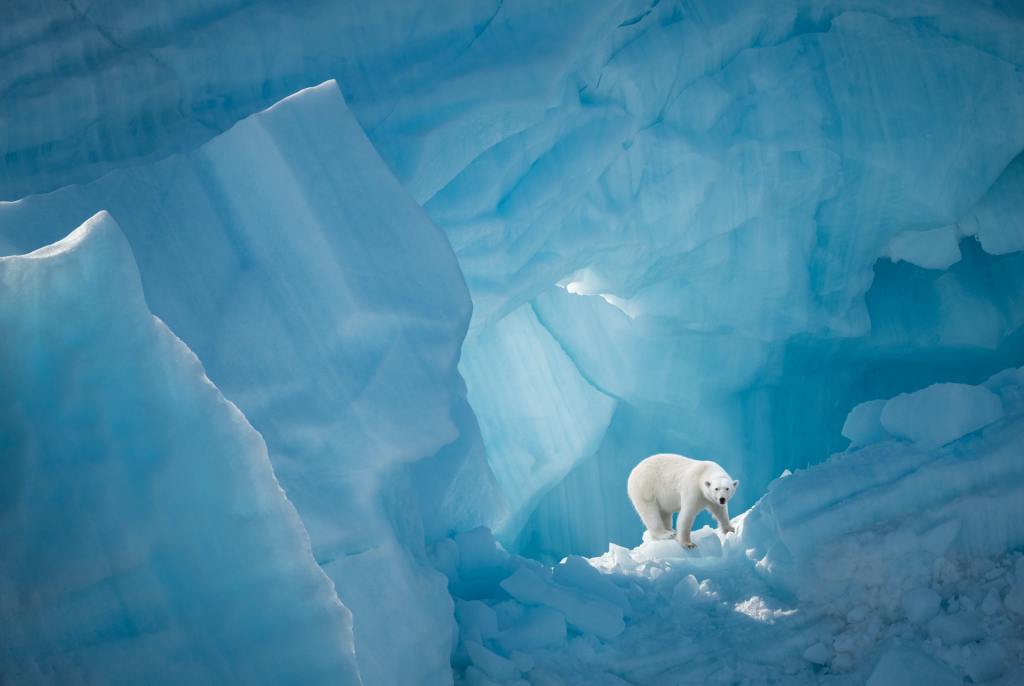
Polar Bear (Ursus maritimus) by Marsel van Oosten Svalbard. Climate change is not the only threat to Polar Bears. In Canada, the world’s largest exporter of Polar Bear skins, more than 600 Bears are legally killed every year. Hunters worldwide kill more Polar Bears than African Rhinos, which are protected by guards against poaching.

Six out of the eight Bear species are listed by the International Union for Conservation of Nature (IUCN) as Vulnerable or Endangered due to pressures ranging from climate change to human-wildlife conflict. Even those Bears of least concern, such as Brown Bears, are at risk of being lost for good in certain countries.

Founder of Remembering Wildlife Margot Raggett said: “Humans have long had a special relationship with Bears – we hug them at night as children and love seeing them in story books and on screen. Yet, in the real world, they’re not always viewed with the same affection and can been seen as a nuisance or a threat.

“Some face lives of misery – as dancing Bears, illegally trafficked as pets or used for medicine – or face serious threats and extinction through climate change, hunting or human-wildlife conflict.

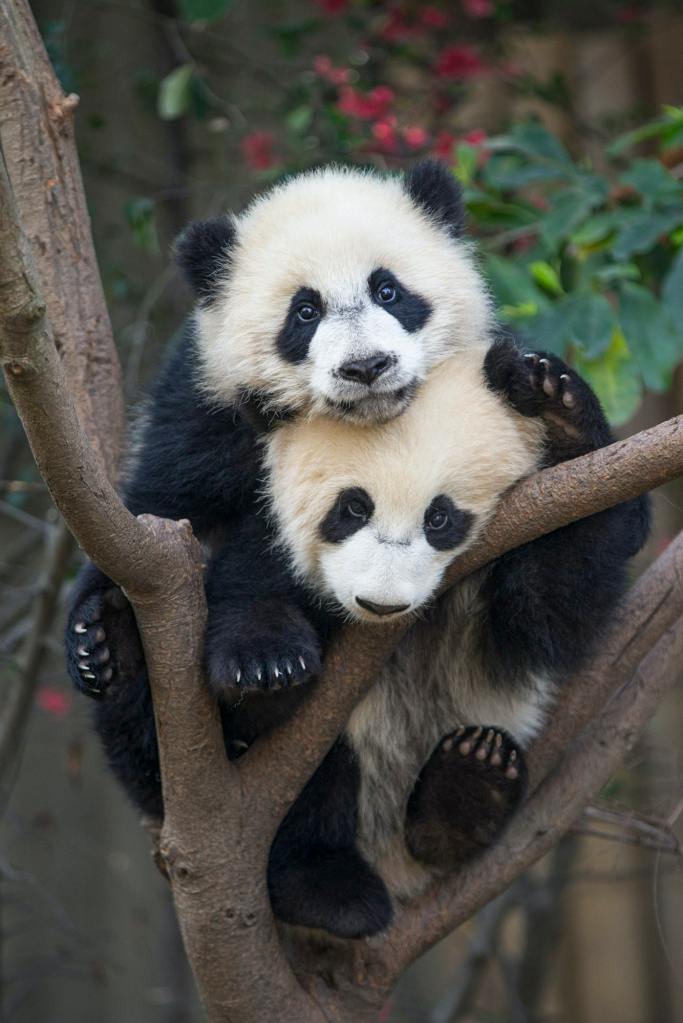
Giant Panda (Ailuropoda melanoleuca) by Suzi Estzerhas. Two playful seven-month-old Giant Panda cubs in a tree Chengdu, China

“Through images and words, this book shines a spotlight on their diversity, beauty and resilience as well as raising awareness of their plight and raising funds for organisations passionately fighting for the future of Bears.”

The foreword for the book is by award-winning wildlife filmmaker, presenter and public speaker Gordon Buchanan MBE.

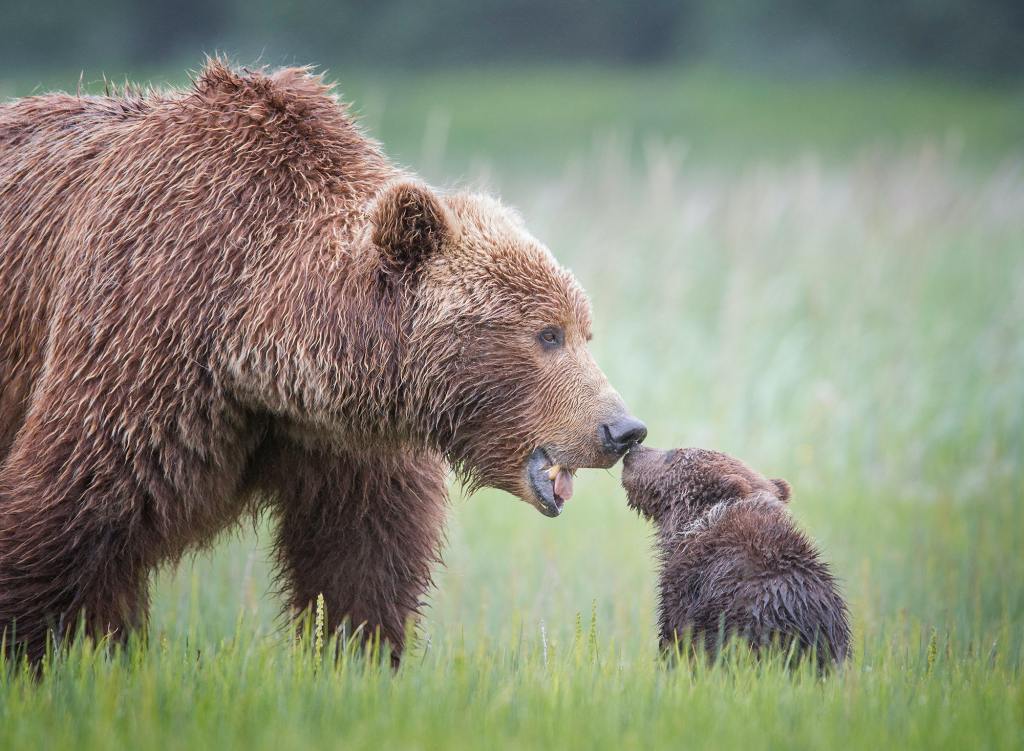
Brown Bear (Ursus arctos) by Tin Man Lee Lake Clark National Park, Alaska. After three hours lying motionless in remote Alaska, the photographer caught this picture of a spring cub waking up from a deep sleep and sitting up, with mother Bear, who was 20 feet away, dashing back to give a cub a nose touch.

Further information about Remembering Wildlife can be found here .

To find out more about the projects that Remembering Wildlife has already funded, click here

Each book costs £45 GBP (approximately $50 USD) and copies can be ordered at Remembering Wildlife