Latest RSPB Birdcrime Report Shows Hen Harriers And White-Tailed Eagles Amongst The Victims Of Continued Illegal Persecution!

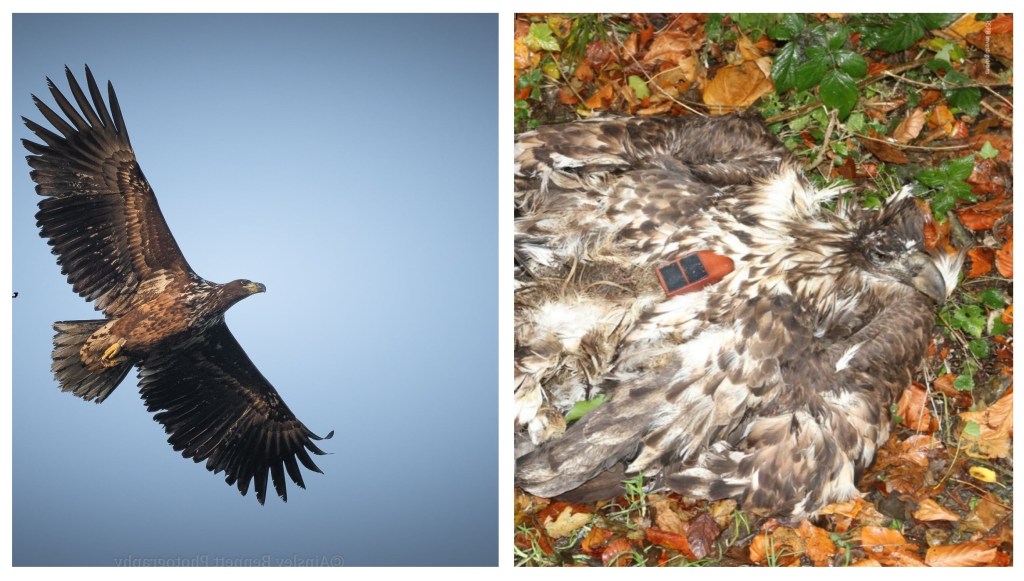
White-Tailed Eagle (G408) found poisoned on a pheasant shoot in West Sussex. Credit: RSPB

Press release from RSPB (24 November 2023):

Birdcrime report reveals Hen Harriers and White-Tailed Eagles amongst victims of continuing illegal persecution

*61 confirmed bird of prey persecution incidents nationally

·*At least 64% of all incidents are linked to land used for gamebird shooting

The RSPB’s annual RSPB BIRDCRIME REPORT published today details the illegal shooting, trapping and poisoning of protected birds of prey. Amongst the victims are Buzzards, Red Kites, Goshawks, Hen Harriers, Peregrine Falcons and White-Tailed Eagles. All these species are protected by laws designed to help our rarest and threatened species. There is clearly no place for such crimes against some of our best loved species.
The report documents that Hen Harriers, a red listed species, are being relentlessly targeted, particularly in areas dominated by driven grouse moors. Since January 2022, RSPB and Natural England data reveals that 39 Hen Harriers have been confirmed killed or have ‘suspiciously disappeared’ across the UK, with eight satellite-tagged birds being persecuted or disappearing in suspicious circumstances in the same area near Birkdale in North Yorkshire alone.

Two of the most shocking incidents recorded against Hen Harriers include a Natural England satellite-tagged bird called Free which had its head pulled off while still alive, and four Hen Harrier chicks that were trampled to death in a nest being monitored by Natural England. The report reveals that one RSPB tagged Hen Harrier named Dagda was found shot dead in May 2023 on a moor at Knarsdale, next door to the RSPB nature reserve at Geltsdale on which it was breeding. It is unknown who shot the bird, but the supporting tag data is clear in documenting where and when this incident took place. A recent peer-reviewed study by the RSPB found that survival of tagged Hen Harriers in the UK was very low, with birds living on average for only four months. As much as 75% of annual mortality of tagged birds was due to illegal killing associated with grouse moor management. If this relentless killing continues, the future of these rare and threatened birds remains at serious risk in the UK.

The report also highlights the significant case of a young White-Tailed Eagle from the UK Government licenced re-introduction scheme on the Isle of Wight, which was confirmed poisoned on a shooting estate in West Sussex. This was the first case of this species being illegally killed in England since their extinction due to persecution in the 18th Century. On the same estate, three days after the eagle died from ingesting a banned poison, a Labrador dog suffered the same fate after ingesting the same pesticide – Bendiocarb. Frustratingly the police investigation failed to hold anyone to account for these crimes.

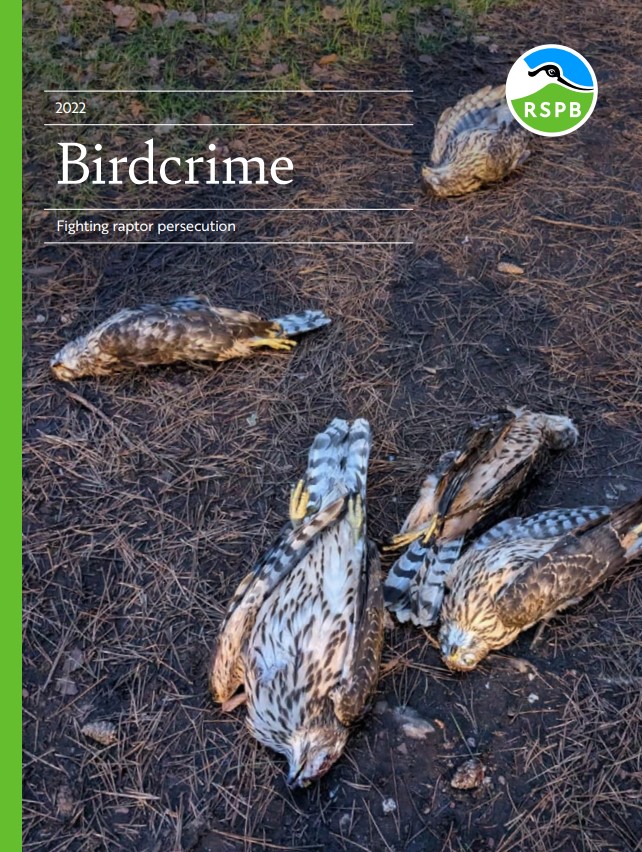
The RSPB Birdcrime report exposes the relentless persecution of Birds of prey across the UK

There were two successful convictions for raptor persecution crimes in 2022, with both individuals being gamekeepers. Disappointingly, in one case, where multiple birds of prey were shot or poisoned – the gamekeeper received a 200-hour community order and was ordered to pay just £1,200 in fines, costs and compensation. As this case highlights, existing wildlife protection laws are failing to protect birds of prey, acting neither as a deterrent nor as an appropriate punishment for the crimes committed.

This latest report, alongside peer-reviewed papers, intelligence and data from wildlife crime incidents continues to affirm that raptor persecution is frequently linked to land managed for gamebird shooting. Evidence shows on some shooting estates birds of prey are deliberately targeted to reduce potential predation on gamebird stocks and sometimes also to reduce disturbance to these quarry species on shoot days. The RSPB continues to call for the licensing of grouse shooting in England, and following such measures now being introduced by the Scottish Government, to provide a meaningful deterrent to the illegal killing of birds of prey.

RSPB Chief Operating Officer, James Robinson said “Sadly, once again, the report documents the shameful illegal killing of rare and vulnerable birds of prey, an important part of our natural heritage. Given the correlation in location between birds of prey persecution and land under game management, the RSPB is calling for greater regulation of shooting, in particular intensive forms of grouse shooting. A Bill to introduce licensing of grouse moors in Scotland to stop raptor persecution is now moving ahead and we need a similar response in England”.

If you notice a dead or injured bird of prey in suspicious circumstances, call the police on 101 and fill in the RSPB’s online reporting form: https://www.rspb.org.uk/birds-and-wildlife/advice/wild-bird-crime-report-form/

If you have information about anyone killing birds of prey which you wish to report anonymously, call the RSPB’s confidential Raptor Crime Hotline on 0300 999 0101.

WHAT YOU CAN DO TO HELP ANIMALS IN NEED

You can support our work by donating as little as £5 – It only takes a minute but it can last a lifetime for an animal in need.

PLEASE CLICK HERE TO HELP ANIMALS IN NEED

Everyone who donates will receive a Certificate of Appreciation as a thank you for helping animals in need.

The Mission of Protect All Wildlife is to prevent cruelty and promote the welfare of ALL animals. We believe EVERY animal should be treated with respect, empathy, and understanding. We raise awareness to protect and conserve wild, captive, companion and farm animals.

It is vital that we protect animals against acts of cruelty, abuse, and neglect by enforcing established animal welfare laws and, when necessary, take action to ensure that those who abuse animals are brought to justice.

Protect All Wildlife are involved in many projects to protect animals’ rights, welfare, and habitats. Money contributed to Protect All Wildlife supports ALL of our worthy programmes and gives us the flexibility to respond to emerging needs. Your donations make our work possible.
Scientists Uncover Widespread Declines Of Raptors In Kenya

A recent study confirms alarming declines in raptor populations in Kenya. Incidental poisoning is a major problem for vultures in particular, depriving ecosystems of the birds’ vital role as scavengers. Conservationists are working with communities to help species recover.

“The population of raptors today bears no resemblance to those numbers we saw a half century ago,” said Simon Thomsett, director of the Kenya Bird of Prey Trust and one of the study’s authors. “And those had already drastically declined 25 years ago before we started to take notice.”

Drawing on road surveys carried out from 2003-2020, as well as historical data from similar surveys done between 1970 and 1977, the researchers found that populations of vultures and large eagle species had all declined. Numbers of previously common small and medium-sized raptors like black-winged kites (Elanus caeruleus) had also fallen sharply.

“The level of decline for many species was huge,” co-lead author Darcy Ogada told Mongabay. “But more surprising was the decline in medium-sized raptors like augur buzzards [Buteo augur] and long-crested eagles [Lophaetus occipitalis] which were once very commonly seen roadside birds and often seen in farms where they are the farmer’s friend because they prey on rodents.”

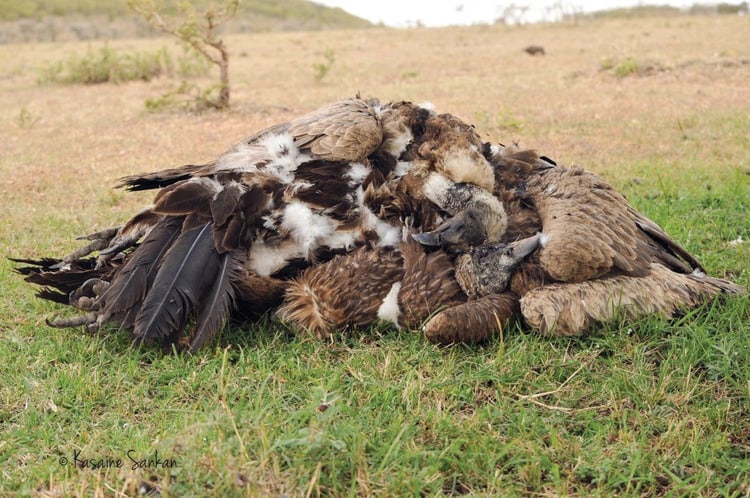
Vultures that died from poisoning in Maasai Mara, Kenya. Image courtesy of Nature Kenya

Ogada, who is assistant director for the Peregrine Fund’s Africa program, and her co-lead author, Phil Shaw of the University of St. Andrews in the U.K., led the team of scientists drawn from Kenya, the U.K., France and the U.S., which published the first report on nationwide trends for Kenya’s raptors.

“Given what we know about biodiversity loss in general in Kenya, we wanted to know specifically about the fate of Kenya’s raptors,” she said. “Fortunately, there was already historical data from the 1970s that was collected using the same method [road surveys], which could be used for comparison.”

Each year from 2010, the researchers spent four or five days driving slowly along roads in different parts of the country, identifying how many of each raptor species they saw. One team of scientists covered Laikipia, Samburu and Meru counties in central Kenya, while another team surveyed the southern part of the country, in Kajiado county and the national parks of Amboseli, Tsavo East and Tsavo West.

Raptors have fared better in protected areas, with the overall rate of decline for vultures and large eagles less pronounced in national parks and private conservancies than in unprotected areas. Medium-sized and small raptors like Montagu’s harriers (Circus pygargus) were actually seen more frequently in protected areas in the 2000s than during surveys in the 1970s, but those gains are tempered by an 85% drop outside of protected areas. Ten of the 22 species covered by the surveys are now found almost exclusively within protected areas, underlining the importance of these areas to their continued survival.

Andre Botha, co-chair of the IUCN’s Vulture Specialist Group, who was not involved with the recent study, said the survey method was a sound one.

“The method that was used to conduct the recent assessment is the same as that followed in 2010 [by these researchers] and also similar to approaches to surveys in various other parts of the world, so it is one way to assess populations,” he said. “It was, however, also scientifically important to follow the same method as previously to enable reliable comparison between the two counts.”

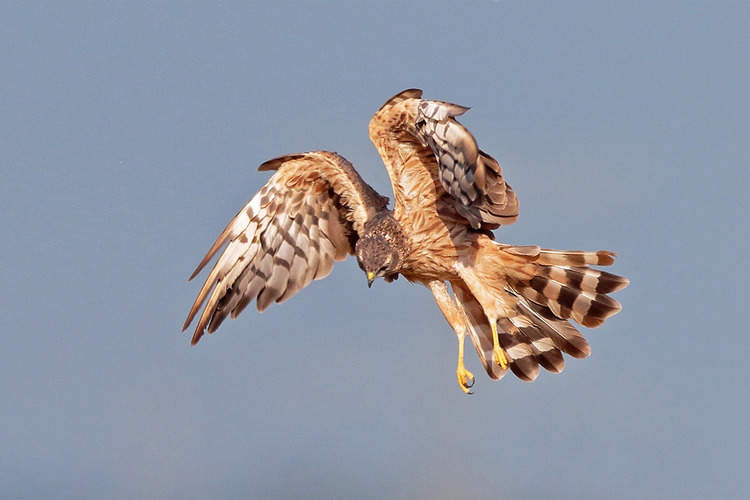
Medium-sized and small raptors like Montagu’s harriers (Circus pygargus) were seen more frequently in protected areas in the 2000s than during surveys in the 1970s, but those gains are tempered by an 85% drop outside of protected areas. Image by Radovan Václav via Flickr (CC BY-NC 2.0).

Grim findings

“Outside of Kenya’s protected area network, there is evidence that populations of many raptors have almost collapsed,” study co-lead Phil Shaw told Mongabay, “and this cuts across species size, diet or ecological requirements. While most species have fared better within protected areas, several large raptor species have shown worrying declines even here, suggesting a need to bolster site protection and connectivity.”

Both the reasons for the decline and possible remedies are well-known.

“Some threats, like raptor electrocutions, can be easily mitigated and some excellent work is being done around the world to reduce raptor mortalities,” said co-author Munir Virani, CEO of the Mohamed Bin Zayed Raptor Conservation Fund. “A case in point is the remediation of power lines done in Mongolia where raptor mortalities from electrocution has been reduced by 98% per year.”

More complicated is eliminating the use of pesticides used on crops and medicine given to livestock, both of which harm raptors’ health.

“Mitigation in the form of banning the veterinary drug diclofenac, which was responsible for the decline of up to 99% of populations of vulture species in Asia, has dramatically lowered additional mortality in these populations,” Ogada said. “In the U.S., banning of the chemical DDT also led to national resurgence of the country’s national bird, the bald eagle, such that populations today are growing at 10% per year.”

Other threats faced by raptors include habitat destruction caused by expanding agriculture and logging, being trapped or shot (including for use in traditional medicine), and poisoning. Vultures in particular are vulnerable to poisoned carcasses targeting other predators.

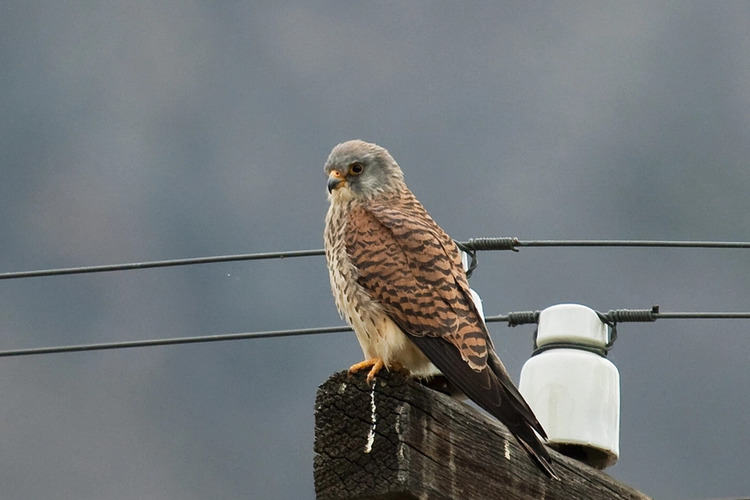
A lesser kestrel (Falco naumanni). Some threats, like raptor electrocutions, can be easily mitigated and some excellent work is being done around the world to reduce raptor mortalities, say experts. Image by Sergey Pisarevskiy via Flickr (CC BY-NC-SA 2.0).

Helping vultures recover

Responding to the worrying collapse in vulture populations, the Peregrine Fund, Nature Kenya, BirdLife International, the Kenya Bird of Prey Trust and others are working to reduce cases of poisoning by tagging and tracking vultures, training people in the raptors’ range to help protect and rescue birds from poison, and building predator-proof livestock sheds as an alternative to poisoning.

Conservationists have documented cases of poisoning across the country to map hotspot zones.

“Keeping the records of poisoning incidences help us map the hotspot zones in areas where conflicts are rife so that awareness can be increased,” said Vincent Otieno, vulture conservation program coordinator with Nature Kenya. “From our records, such areas prone to poisoning are those that border conservancies and national parks.”

In Narok and Kajiado counties, at the southern end of the Rift Valley, community volunteers have been trained to respond quickly to vulture poisoning incidents. Equipped with rubber gloves, face masks, plastic containers, and fuel, they bag and burn poisoned carcasses so more vultures don’t gather and gorge themselves on a deadly meal.

They can also bring stricken birds to raptor centers at Naivasha and Soysambu, clinics set up to treat poisoned vultures. Once the birds recover, they are fitted with GPS trackers and released.

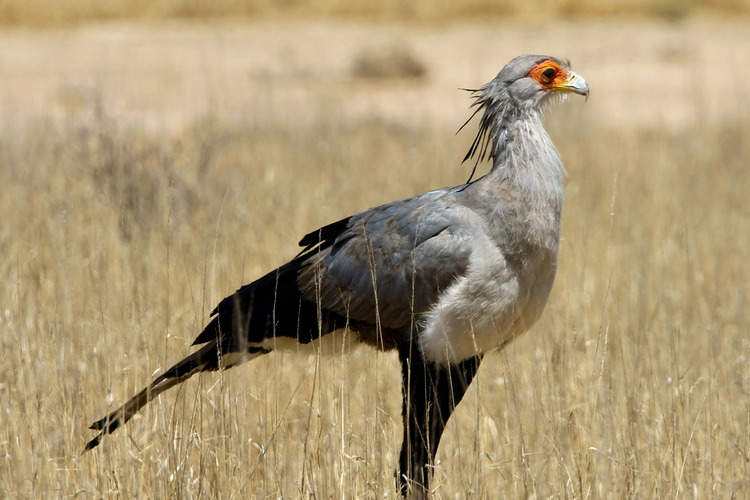
Encounters with 19 of 22 species studied using road surveys fell, including for the secretary bird (Sagittarius serpentarius), which was encountered 94% less frequently. Image by Ansie Potgieter via Unsplash.
Several conservation organizations are working to reduce cases of poisoning by tagging and tracking vultures, training people in the raptors’ range to help protect and rescue birds from poison, and building predator-proof livestock enclosure as an alternative to poisoning. Image courtesy of Caroline Chebet.

“Tagging these vultures with GPS trackers helps us map out the areas where they spent most of the times,” said study co-author Shiv Kapila, from the Kenya Bird of Prey Trust. “The information we get helps when conducting anti-poisoning campaigns and education.”

Similar work with communities is taking place in the central counties of Laikipia and Samburu. In addition to training volunteers to respond to poisoning incidents, the Peregrine Fund is working alongside conservation nonprofit Lion Landscapes to construct predator-proof bomas, offering herders an alternative to way to protect their livestock from lions than leaving poisoned carcasses where the big cats — as well as vultures, hyenas and other scavengers — will find them.

Conservation groups have also trained rangers, police officers and Kenya Wildlife Service officers.

Botha, who is also the program manager of the Endangered Wildlife Trust’s Vultures for Africa program, noted that conservationists in Kenya and South Africa have been working together for almost 15 years, training thousands of people across 15 African countries to reduce wildlife poisoning.

“We continually communicate and share expertise between countries and beyond, but the uptake of certain interventions are done with different degrees of success, largely due to different circumstances in-country and limited resources that are always a challenge,” he said.

This article by Caroline Chebet was first published by Mongabay.com on 17 May 2022


What you can do

Support Protect All Wildlife’s work by donating as little as £1 – It only takes a minute. Please donate at HELP PROTECT ALL WILDLIFE. Thank you.

What you can do

Please SHARE to raise awareness to wildlife and environmental issues from around the world. You can also receive NEWS and UPDATES by signing up in the top right of this page.