This is your chance to bid on signed pictures very kindly donated by Ricky Gervais in our ‘Charity Auction To Help Disabled Animals’.
This is a sealed bid auction, so all you need to do is decide which item you would like to bid for and send us your bid with the LOT NUMBER and name by email to protectallwildlife@btinternet.com by 21:00 on the 24th of August 2025. We will email you to let you know if your bid is the highest. Postage costs will be calculated when the auction ends. If you need any more information etc please email Paul at protectallwildlife@btinternet.com.
This is your chance to bid on signed memorabilia kindly donated by animal welfare legend Ricky Gervais in our ‘Charity Auction To Help Disabled Animals’.
This is a sealed bid auction, so all you need to do is decide which item you would like to bid for – noting the reserve price for each – and send us your bid with the lot number and name by email to protectallwildlife@btinternet.com by 21:00 on the 31st of January 2024 . We will email you to let you know if your bid is the highest. Postage costs will be calculated when the auction ends. Good luck!
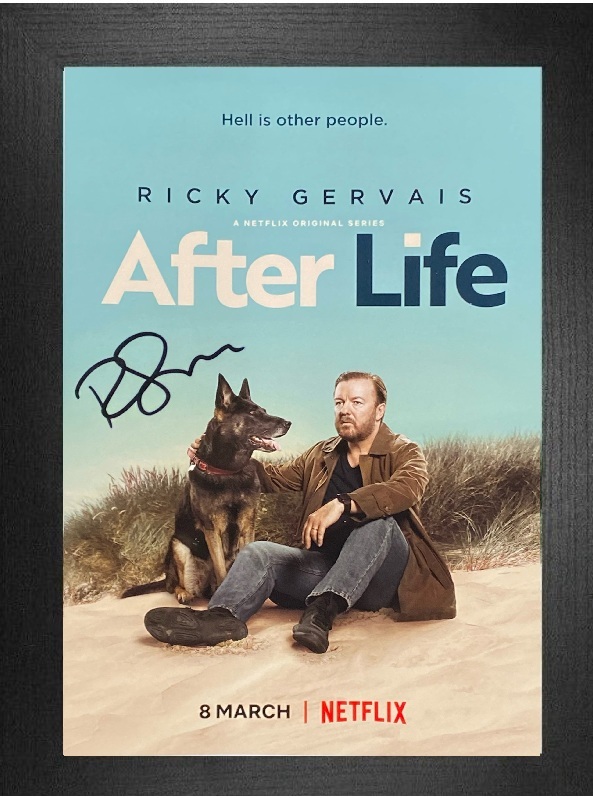
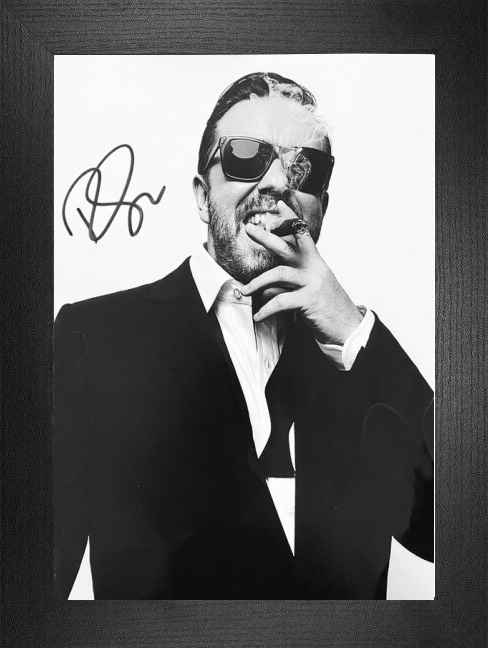
This signed image has been very kindly donated by animal welfare great Ricky Gervais. (Image size 200 cms x 250 cms. Frame is for display purpose and is not included).
Reserve: £100
Lot 2
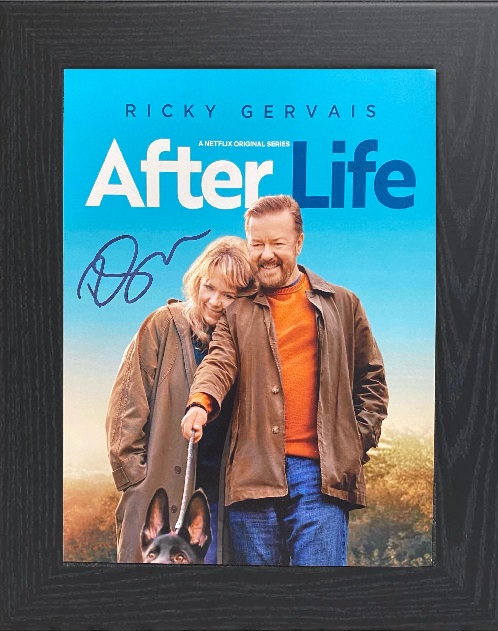
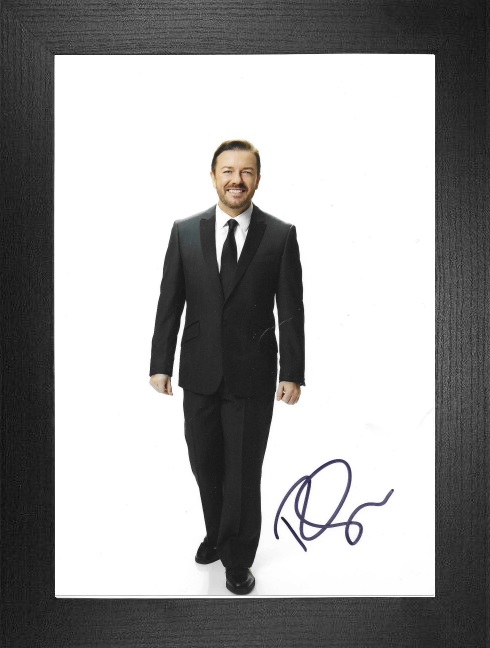
This signed image has been very kindly donated by animal welfare great Ricky Gervais. (Image size 200 cms x 250 cms. Frame is for display purpose and is not included).
Reserve: £100
Lot 3
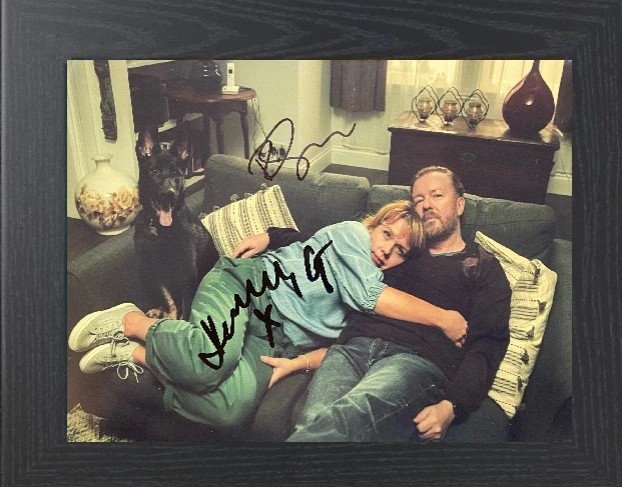
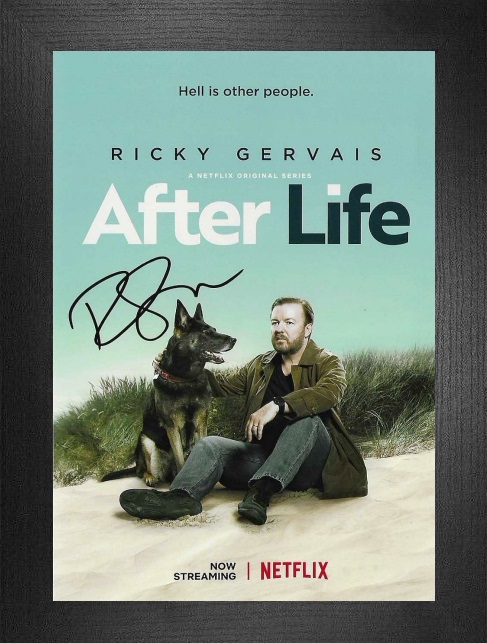
This signed After Life image has been very kindly donated by animal welfare great Ricky Gervais. (Image size 7 inches x 5 inches. Frame is for display purpose and is not included).
Reserve: £100
Lot 4
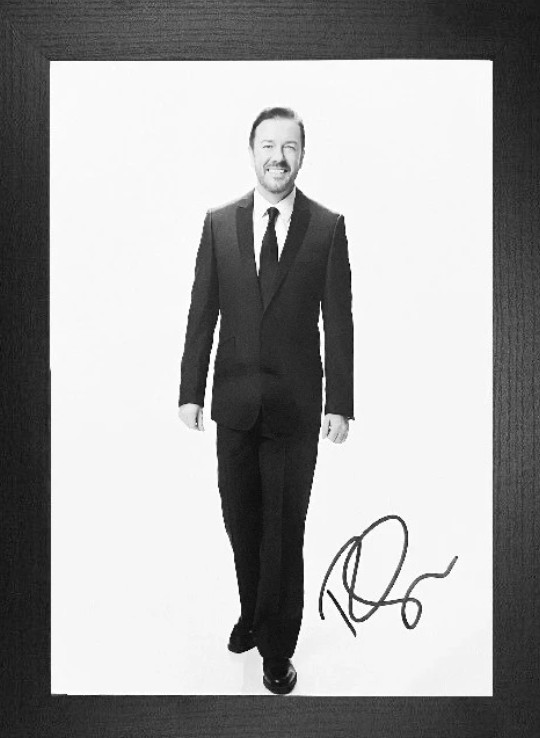
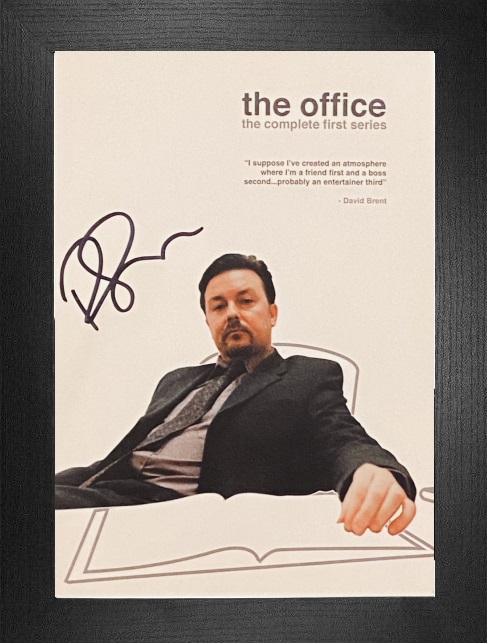
This signed The Office image has been very kindly donated by animal welfare great Ricky Gervais. (Image size 105 cms x 150 cms. Frame is for display purpose and is not included).
Reserve: £100
Thank you for taking the time to look at our auction and happy bidding.
If you would like to make a donation to our fundraiser to help support our work you can do so at Fundraiser To Help Disabled Animals. Thank you.
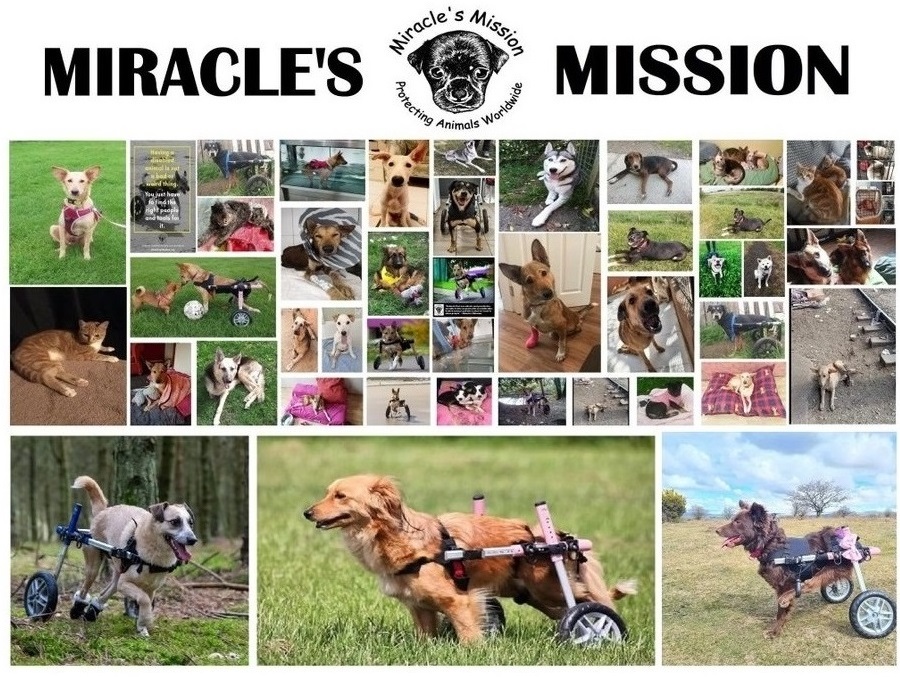
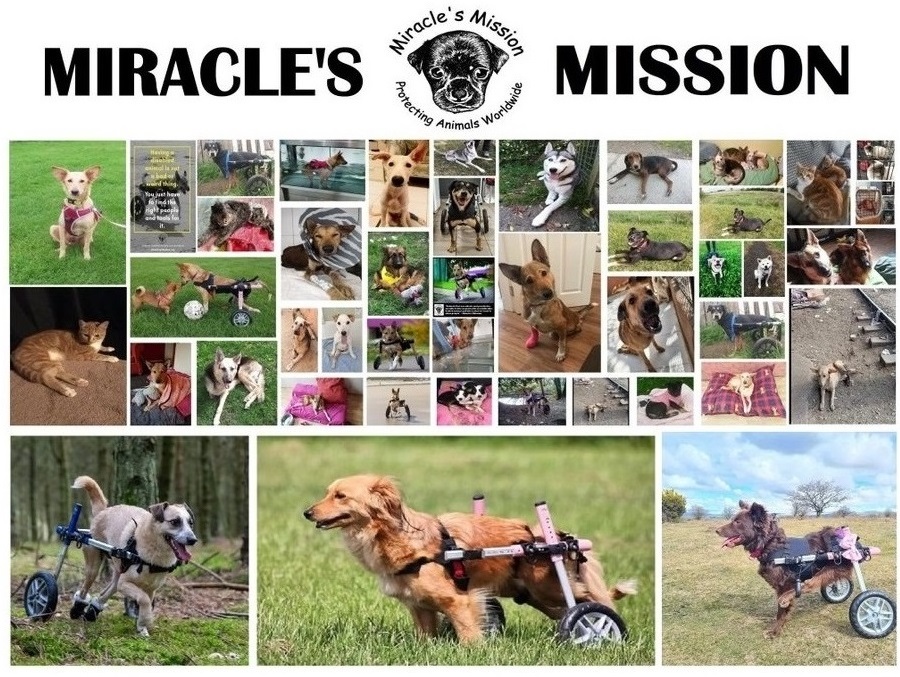
Miracle’s Mission are a non-profit animal welfare organisation that works with sick, injured and disabled animals worldwide.
Our mission is to provide a place of safety for animals in danger, to educate on the needs of neutering both pets and strays and to neuter stray dogs and cats to prevent the birth of more animals onto the streets. We also rehabilitate and re-home dogs in need, often with disabilities, from our UK rescue base.
Thank you for your support in the past year but we still need your help.
We are wrapping up another year at Miracle’s Mission. In the past year we have continued to provide a place of safety for animals in danger, to educate on the needs of neutering both pets and strays and to neuter stray dogs and cats to prevent the birth of more animals onto the streets. We have also rehabilitated and re-homed many dogs and cats in need, many with disabilities.
Even with all this wonderful news we are still in dire need of funds to help us keep our doors open. We need donations to help pay for food, heating and other bills, as well as staff costs and expenses like petrol for home visits. The average cost to feed a dog for one month typically costs somewhere from £16 to £50, depending on the breed. Microchipping costs about £10 to £15. The average cost of essential vaccinations is £64. A routine vet appointment costs between £40-£60. The average cost of a 30-miunte physiotherapy or hydrotherapy session is £50. Prosthetics and dog wheels etc are upwards of £500.
We appreciate your continuous support, we truly wouldn’t be here without you.
Could you help us with our end of year fundraiser? Any donation helps!
With best wishes, Paul Christian, Patron of Miracle’s Mission.
Henry, a dog that twice cheated death in Ukraine after being rescued from floods and surviving a Russian bombing has found a new furever home.
Henry The Dog Of War Credit: Save The Dogs
Heartbreaking footage captured the crossbreed, named Henry, clinging for life in the rubble of a building after the Kakhovka dam in Kherson was destroyed.
The sound of missiles dropping can be heard in the background as rescuers made their way through flood water to rescue the stricken pooch in June.
To avoid drowning, brave Henry managed to doggy-paddle to the remains of a bombed-out building poking out of the flood waters.
To avoid drowning, brave Henry managed to doggy-paddle to the remains of a bombed-out building poking out of the flood waters. Credit: Save The Dogs
He was taken to a clinic in Odesa for round the clock treatment after being found alone, scared and covered in toxic sludge which burned his skin.
But his ordeal didn’t end as shortly after his rescue, the animal clinic caring for him was bombed by the Russians.
Despite the bombardment, Henry and the other animals escaped unharmed and he was moved to another clinic where he continued to receive treatment.
Just four months on and he is in a loving new home thanks to Save the Dogs (STD).
Gregg Tully, Country Director for Save The Dogs, revealed how Henry was originally found “collapsed, exhausted and barely conscious”.
He said: “After the dam in Kherson exploded, [Henry] was one of the dogs that was pulled out of the flood waters.
“He was covered in oil and sludge. There was a lot of toxic material at the bottom of the reservoir that washed out with the flood.”
Henry was covered in oil and sludge Credit: Save The Dogs
The thick coat of toxic oil coating his fur also caused painful chemical burns to his skin.
Gregg added: “We thought he was a black dog – we thought this dog was all black.
“And then he was cleaned up and taken to a vet clinic, and actually, he’s more white than black.
“He’s still very underweight and he still has some skin problems, but he obviously loves people and is a really happy dog.
“It’s been really inspiring after seeing the videos of him getting pulled out of the flood waters, and now he’s a happy, loving dog in a loving new home.
Henry looking VERY happy in his furever home.
WHAT YOU CAN DO TO HELP RESCUE ANIMALS
You can support our work by donating as little as £5 – It only takes a minute but it can last a lifetime for an animal in need.
Everyone who donates will receive a Certificate of Appreciation as a thank you for helping rescue animals in need.
OUR MISSION STATEMENT
‘Animals that use wheels and prosthetics can live as good a quality of life as fully able-bodied animals and this is what we want to show people’ ~ Victoria Bryceson, founder of Miracle’s Mission.
We do not receive financial support from the government or other institutions. We rely solely on donations from generous animal lovers.
Animal rescues cost a lot of money to run. While we get donations and funding through events like charity runs etc, the costs are EXTREMELY high. We need to pay for food, heating and other bills, as well as any staff costs and expenses like petrol for home visits.
The average cost to feed a dog for one month typically costs somewhere from £16 to £50, depending on the breed. Microchipping costs about £10 to £15. The average cost of essential vaccinations is £64. A routine vet appointment costs between £40-£60, surgery can cost anywhere over £1000. Physiotherapy, Hydrotherapy – the average cost is £50 for a 30-minute session. Prosthetics and dog wheels etc can cost up to £500.
Please help Miracle’s Mission continue to rescue, rehabilitate and rehome
MANY MORE sick, injured and disabled animals by kindly donating ANY amount, large or small, today. Thank you.
Kate Ward’s nickname “Camberley Kate” is said to have been given to her by historian Sir Arthur Bryant in his book “The Lion and the Unicorn”. It became the title by which she became known to everyone.
Kate’s early history is somewhat hazy – When interviewed she stated that she was born in Middlesbrough on June 13th 1895, and remained proud of her Yorkshire roots. Orphaned before she was ten, she was brought up by an aunt in a strict religious atmosphere. As a young girl she went into service, in Yorkshire and eventually found her way to Camberley. In 1943 Kate bought a cottage in Yorktown, and soon afterwards took in her first stray, a dog which had been about to be put down due to lameness.
As word grew, the number of dogs in her cottage increased – some being tied to her door, some left in carrier bags, others brought in by the police or other agencies. At the end of her life she estimated that she had looked after more than 600 dogs and local vet Geoffrey Craddock, a great admirer of Kate work testified that they were well looked after. An entry in the 1957 directory FOR Camberley reads “Ward K 218 London Road., Cam., Dogs Home”. In 1976 she stated that she had 34 dogs, although by 1977 she had cut this down to 19, as she had been told to go easier at the age of 82! The growth of other dog rescue centres helped in this regard. She also had at least one cat.
CAMBERLEY KATE
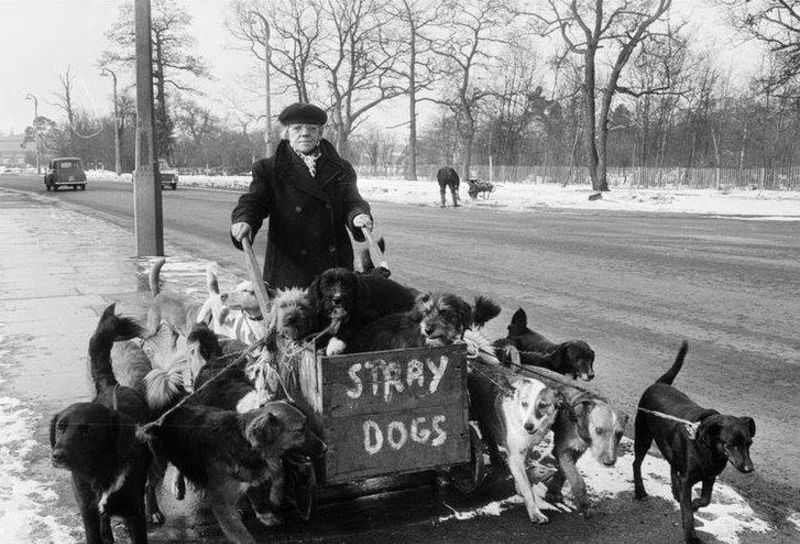
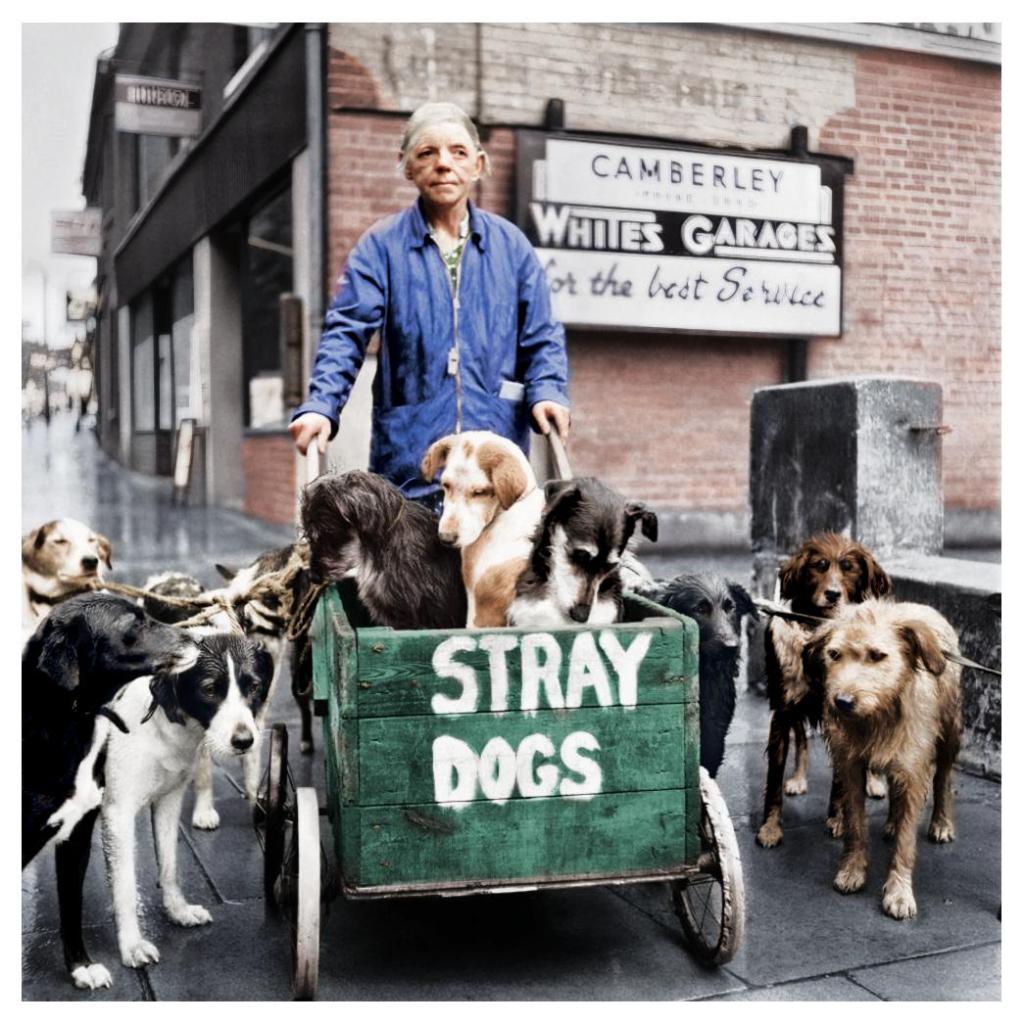
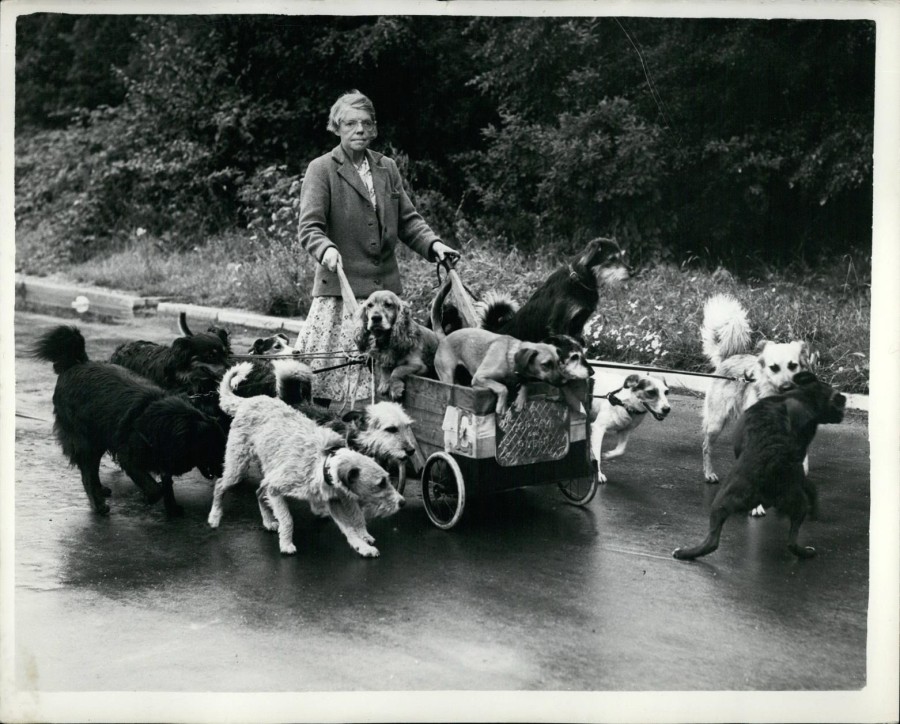
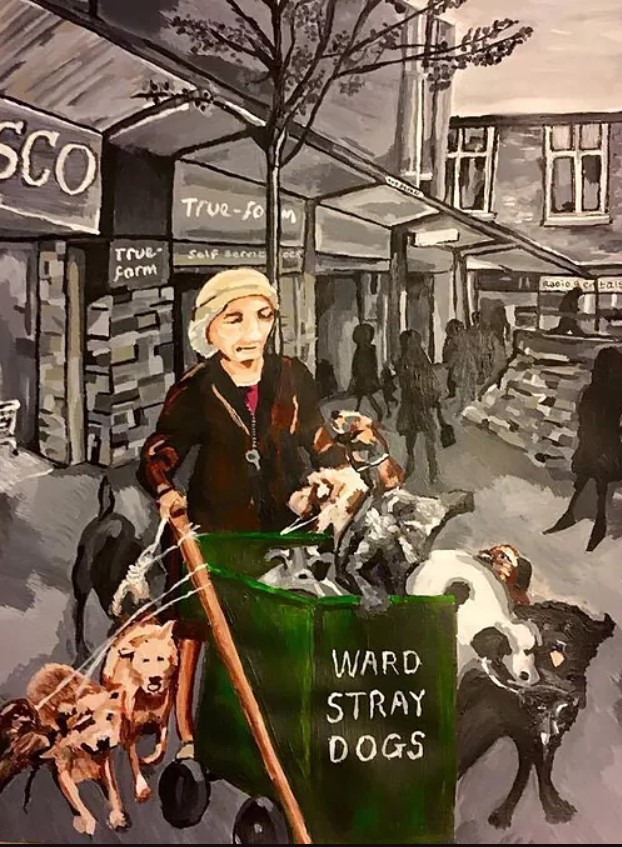
Kate and her olive-green painted hand cart, labelled STRAY DOGS, was a familiar sight locally as she pushed it from Yorktown to Camberley each day, through the town centre and up to Barossa Common, on a route suggested by the police. Some of the dogs were allowed to ride in the cart, others were attached to it with lengths of string, and occasionally a favoured few ran loose alongside. Inside the cart, there was usually some meat for the dogs and a shovel to clean any mess away. The dogs were controlled with the help of a whistle. Locals became used to the sight of Kate pushing her cart along the busy London Road although it never ceased to amaze outsiders.
As a local celebrity Kate and her dogs were much photographed, a situation she tolerated as long as the photographer gave a donation for the upkeep of the animals. She also sold her own photographic postcards, and gave short shrift to those who tried to take their own pictures. Generous supporters gave money to assist her work and some even left bequests. She was scrupulous that this money should be used only for its intended purpose: the dogs had their own bank account, administered by 2 trustees. She left money in trust for the few dogs left at her death.
If you gave her some money, she would INSIST you take a photo. That way she could not be accused of begging.
KATE AND HER CART AND DOGS WERE A WELL-KNOWN SIGHT IN THE TOWN UNTIL HER DEATH IN 1979
A diminutive figure with her shock of white hair and her beret, Kate defended herself and her work passionately against her critics, such as those who wanted her out of the town centre or who regarded the dogs as dangerous or a health or traffic hazard. On one occasion she rammed a new car which was blocking her way. She also had a number of disputes with the authorities. These clashes were often recorded in the columns of the press. However she won the backing of the local police for her work in taking abandoned dogs in off the streets.
In 21 August 1969 Kate was in the Camberley News fighting plans to introduce a bye law making it illegal for dogs to be out without a lead. This followed complains from residents of new housing estates, and concerns about road accidents caused by stray dogs. In her customary forthright fashion she condemned “The Council is nothing more than a collection of dog-haters. I think this will be rotten. It means that dogs will be chained up all day”. A proposal to ban dogs from the new precinct in Camberley also met with a terse response, particularly since she was in the habit of shopping at Sainsbury’s and leaving some of the dogs tied up outside. When protests about the local drag-hounds running out of control when being exercised attracted her support Kate, in typical fashion, addressed her complaint directly to the King. The Royal family continued to be a favourite route for correspondence. When a local schoolteacher complained that she had seen her beat her dogs with a stick, Kate immediately wrote in protest to the Queen. This was not their first encounter – when Princess Elizabeth got married one of the dogs sent a present of a dog lead.
KATE WITH CAT AND SOME OF HER DOGS AT HOME
As these anecdotes show, Kate was an excellent publicist. A local policemen recalled that occasionally a dog would get loose and be brought to the dog pound. If the Police Station was empty she would pay the fine quietly and readily, but if there was an audience she would protest vocally!
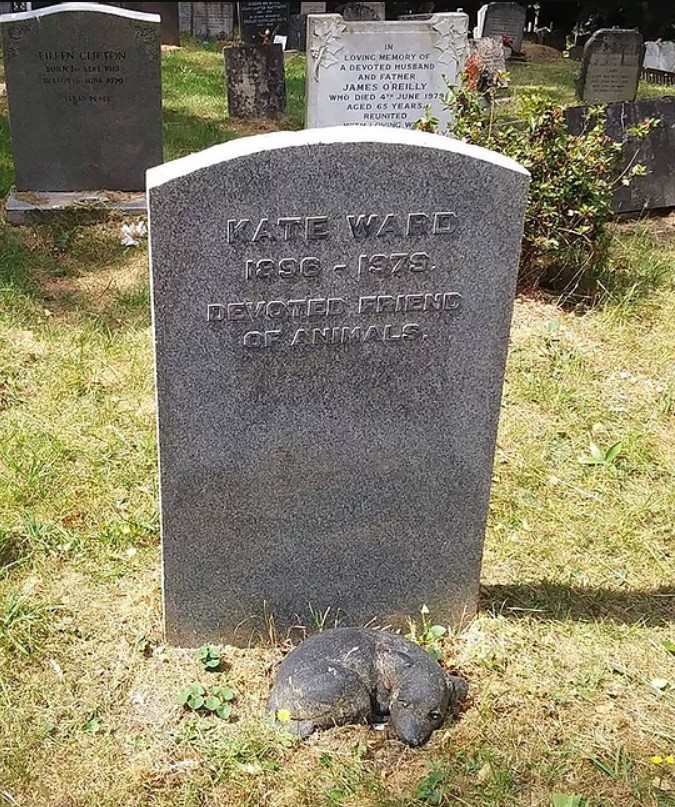
Following a series of strokes old age and ill-health forced her to leave her cottage and her remaining seven dogs were put into kennels. Her last weeks were spent at Kingsclear residential home and she died on 4th August 1979. Her funeral was at St Michael’s, Yorktown.
Despite her avowed dislike of people, Baptist Minister the Rev Chris Russell who officiated at her funeral, remembers her private generosity to those in need. This aspect of her life she kept anonymous, passing on her donations through third parties.
After her death, Camberley vet Geoffrey Craddock was quoted in the Camberley News as saying “Camberley has lost its most celebrated and best known character. She will be greatly missed by those of us who had the rare privilege of knowing her”.
Kate Ward (Camberley Kate) is buried at St Michael’s Church in Camberley and protected by a dog.
During her lifetime, Kate’s fame spread far and wide. She featured In the national press and on television programmes such as “Nationwide” and “Tonight”. was featured on NBC in the United States and her story appeared in publications across Europe from France to Rumania. She also received the ultimate accolade of a feature in “Time” Magazine, and was photographed by Lord Snowdon. To her surprise, in 1967 she received an award from the magazine “Dog’s Life” for her work. In answer to the inevitable question, why she did it? her invariable reply was that she preferred dogs to humans.
KATE PUTS UP WITH A FILM CREW FOR THE BENEFIT OF HER DOGS
Her home at 218 London Road was just a few doors along from the former Lamb pub, near the present Meadows roundabout, but Is no longer standing. The Katherine Court retirement flats were named after her at the suggestion of a local resident in 2000.
A BEAUTIFUL PAINTING OF KATE AND HER BELOVED DOGS
There are so many great lessons we can learn from the life of Kate Ward, both as responsible dog owners, human beings, and as pet rescue charities. Most of all Kate recognized the value of a photograph and how it could be used for the positive influence of others, to bring light to a cause, and to help raise money.
Please share for others to enjoy.
WHAT YOU CAN DO TO HELP ANIMALS IN NEED
You can support our work by donating as little as £5 – It only takes a minute but it can last a lifetime for an animal in need.
Everyone who donates will receive a Certificate of Appreciation as a thank you for helping animals in need.
The Mission of Protect All Wildlife is to prevent cruelty and promote the welfare of ALL animals.
We believe EVERY animal should be treated with respect, empathy, and understanding. We raise awareness to protect and conserve wild, captive, companion and farm animals.
It is vital that we protect animals against acts of cruelty, abuse, and neglect by enforcing established animal welfare laws and, when necessary, take action to ensure that those who abuse animals are brought to justice.
Protect All Wildlife are involved in many projects to protect animals’ rights, welfare, and habitats. Money contributed to Protect All Wildlife supports ALL of our worthy programmes and gives us the flexibility to respond to emerging needs. Your donations make our work possible.
The cost of changing a rescue animal’s life forever – PRICELESS!
To feed a dog for one month typically costs somewhere from £16 to £50, depending on the breed. Microchipping costs about £10 to £15. The average cost of essential vaccinations is £64. A vet appointment costs between £40-£60. Physiotherapy/Hydrotherapy – the average cost is £50 for a 30-minute session.
You may wonder, why do you have to pay to adopt a dog?
Well, running an animal shelter is not cheap, with food, heating and other costs, so you money goes towards supporting them in the work. It also pays for vital care that your new pet has had, and covers essential expenses that you’d likely have to pay for anyway if you got your dog another way.
Why do dog shelters charge people to adopt pets?
First of all, animal shelters cost money to run. While they get donations and funding through events like charity runs, the costs are high. They need to pay for food, heating and other bills, as well as any staff costs and expenses like petrol for home visits.
Adoption fees also cover other expenses for the dogs, such as vet bills, which you’d likely have to pay yourself anyway if you acquired a new dog through other means.
Every dog rehomed is vaccinated, microchipped and neutered.
10 REASONS WHY YOU SHOULD #ADOPTDON’TSHOP!
Adopting a pet has many benefits, some of which you may have not considered. Here are some reasons why adopting a pet would benefit you and your family.
1. You are saving a life
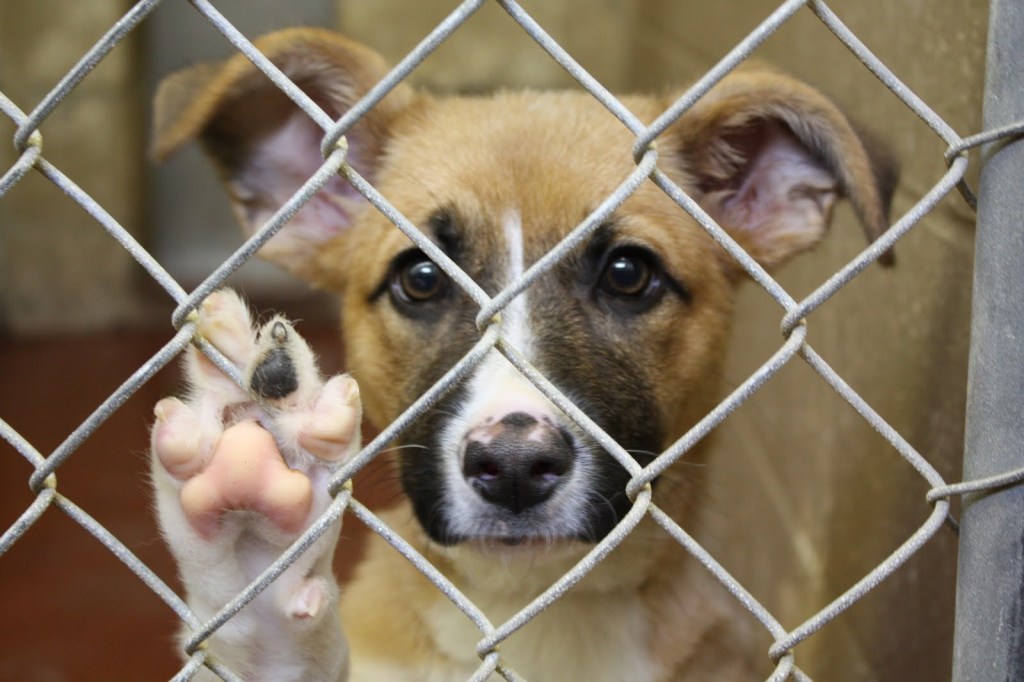
By adopting from a shelter, you are providing an animal with the second chance they deserve. Many have been rescued from horrific circumstances such as cruelty, neglect and abandonment, or quite simply their owners were no longer able to look after them due to illness or a change in situation.
Before and after: these pictures were taken two months apart
Shelter staff work tirelessly to nurse animals back to health, rehabilitate disturbed animals and do everything they possibly can to ensure they are prepared to go to a new home. Sadly, not all of them are as fortunate. Some shelters have to euthanise due to lack of space, meaning many healthy animals lose their lives. By rehoming a pet you can give an animal that has been abandoned through no fault of their own a loving, stable home, and help to stop overpopulation.
2. You will save money
Shelters often microchip, spay, neuter and vaccinate the animals that come into their care. This saves you a lot of money because you don’t have to pay for the procedures yourself and it ensures the pet you are taking home is healthy. Also, the prices of adopting a pet from a shelter are often a lot lower than the rates charged by breeders.
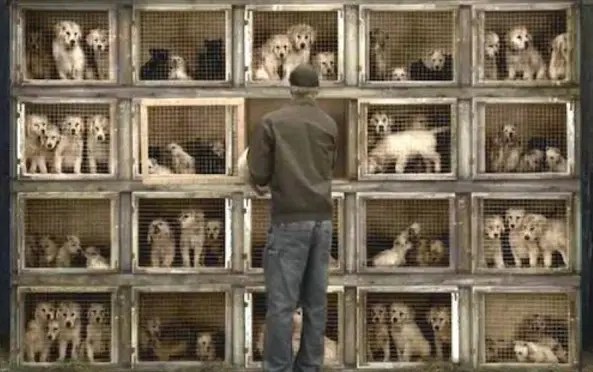
3. Can help to eradicate puppy farms.
A puppy farm, or mill, is the illegal practice of breeding puppies for the sole purpose of maximising profit, without any regard to the dogs’ health or wellbeing. Dogs at puppy farms are forced to breed several times to their detriment and they are often kept in terrible conditions without basic necessities.
Bred Relentlessly For Profit
People who run such places are not concerned with producing healthy dogs, so they can be born with severe problems that emerge over time. The dogs usually don’t receive any veterinary care, and will often be destroyed once they can no longer reproduce. Additionally, dogs at pet shops are often products of puppy farms. Adopting from a shelter aids in stopping dogs from being subjected to such horrific circumstances, because rather than funding this illegal trade you will be rehoming a pet from somewhere reputable that supports animal welfare.
4. Can improve your health and make you happier
Various studies have shown that a having pet can elongate your life, whilst improving your overall happiness and health. It also helps people with depression, stress, anxiety and many other ailments. The affectionate and loyal nature of dogs as pack animals that form close relationships with their owners can help sufferers of depression, who may feel like they don’t have anybody else.
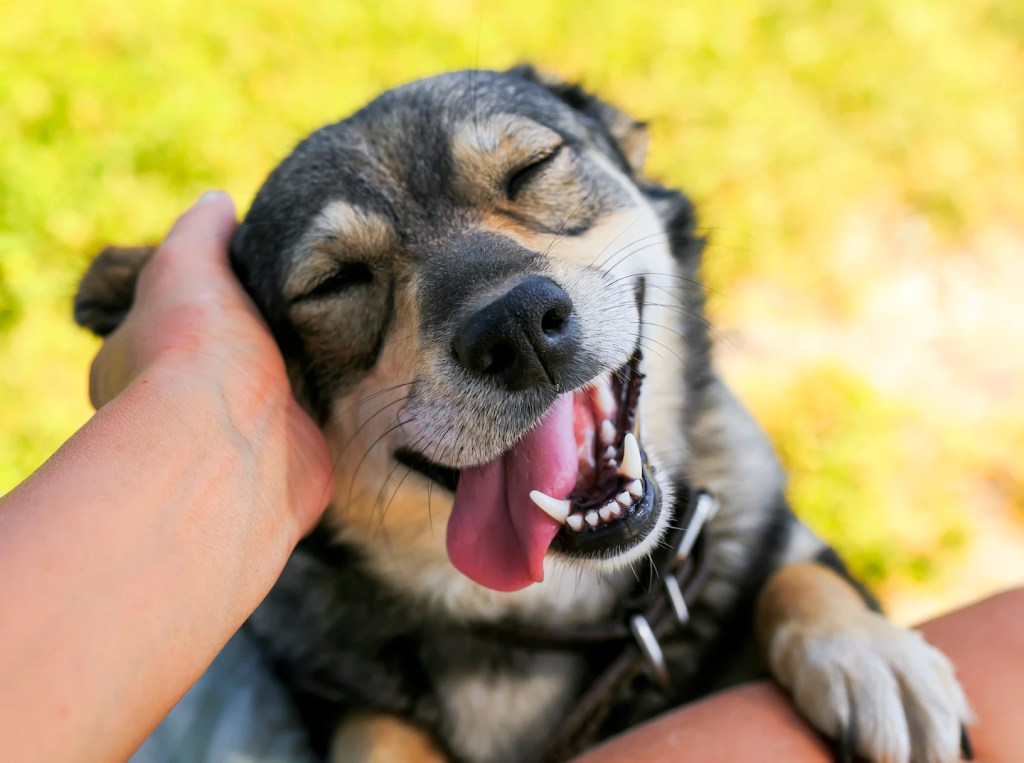
Stroking your pet can reduce your blood pressure and stress levels, and playing with them can increase the levels of serotonin and dopamine your body produces, making you feel calm and relaxed. Walking the pet is a way to exercise and provides sufferers of anxiety and depression with a reason to leave the house. It also creates opportunities for socialising with other dog walkers. The animal you have helped through rehoming can help you.
5. Can benefit children
Children can be taught valuable life skills through pet ownership, such as the importance of maintaining responsibilities. Rehoming a pet will also encourage empathy by making them think about how they have helped to give an unwanted animal a loving home. Pets can help children with separation anxiety and provide them with security, as they can be safe in the knowledge that someone will always be there. As well as this, they can be a loving companion and playmate.
6. Many of the animals are housetrained
Animals at shelters have often been housetrained in their previous home, particularly if they are older. This saves you a lot of time and extra effort when training your new pet where to go to the toilet.
7. Unconditional love
A pet is a companion that will never judge you, will love you regardless of whatever happens and will always be there. As well as making you feel great, their unconditional love raises your self-esteem because of the affection they show you. It is said that animals know when they have been rescued, so the bond between you and your rehomed pet will be especially strong.
8. You could get a pet you never expected
Although you may have an idea of what you are looking for, there are a wide variety of animals waiting to be adopted from shelters. This may mean an animal you would never have imagined could turn out to be the best match for you. Therefore, it is always important to have an open mind when visiting shelters.
9. Older animals can prove to be the best companions
Many people want to adopt puppies and kittens without considering the advantages of having an older pet. If trained in their previous home they will be less likely to destroy furniture than a younger pet, and as such, will probably require less supervision. Older pets are often calmer and quite happy to sit in your company rather than demanding constant attention. They also have more developed personalities than puppies or kittens, so it may be more apparent when visiting them at the shelter whether or not you are suited.
10. Adopting supports spaying and neutering
Spaying and neutering animals is important in controlling the animal population. Many pets that aren’t spayed or neutered often contribute to the problem of unwanted animals, which can lead to more being left at shelters. Adopting an animal from a shelter means that your new pet has been spayed or neutered where possible.
Please help us continue to support animal rescues by donating any amount, large or small. Your donations make our work possible.
And please remember…
…the cost of changing a rescue animal’s life forever is – PRICELESS!










 PROTECT ALL WILDLIFE