South Korea’s Dog Farmers Protest At Proposed Ban On Dog Meat

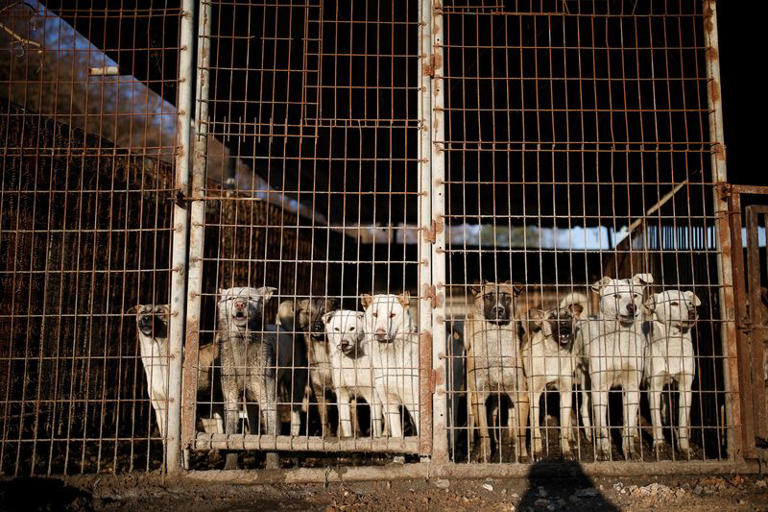
Dogs pictured in cages at a dog meat farm in Wonju, South Korea. Credit: REUTERS/Kim Hong-Ji

HWASEONG, South Korea (Reuters) – As South Korea moves to ban eating dog meat, many of those involved in the centuries-old controversial practice are fighting to keep it legal.

The farmers who breed the dogs, and the owners of eateries that serve the meat, have held protests in front of parliament to demand the government and ruling People Power Party scrap plans to pass a bill this year to enforce a ban.
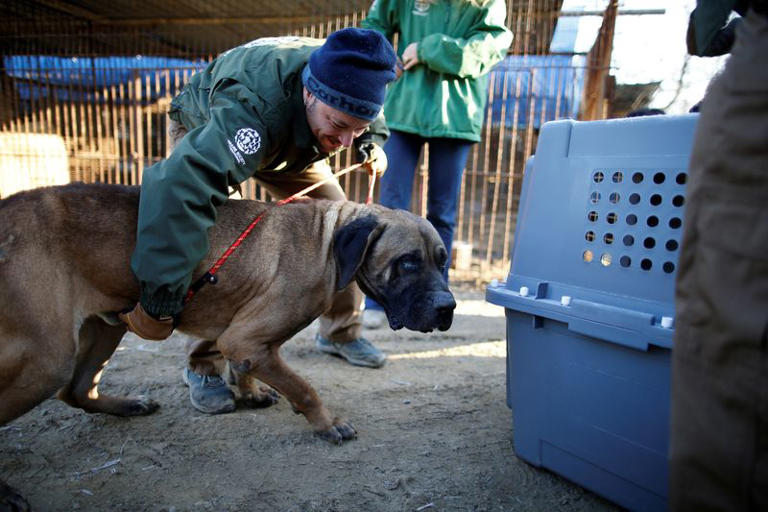
Rescue workers from Humane Society International rescue a dog at a dog meat farm in Wonju, South Korea. Credit: REUTERS/Kim Hong-Ji

They say banning dog meat would decimate their livelihoods, and also limit the options available to diners by taking off the menu a dish that in the Korean peninsula has traditionally been consumed to beat the summer heat, but which today is only eaten by some older people.

“If I have to close down, with the financial condition I’m in, there really is no answer to what I can do,” said Lee Kyeong-sig, who runs a farm outside Seoul raising up to 1,100 dogs. “I’ve been in this for 12 years and it is so sudden.”

A Gallup Korea poll last year showed almost two-thirds of respondents opposed eating dog meat, with only 8% saying they had eaten dog within the past year, down from 27% in 2015.
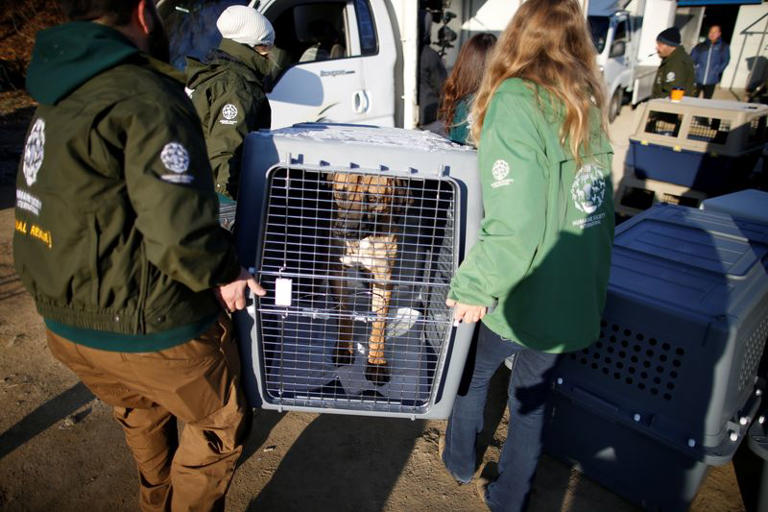
Rescue workers from Humane Society International rescue a dog at a dog meat farm in Wonju, South Korea. Credit: REUTERS/Kim Hong-Ji

Despite its declining popularity and opposition from animal rights activists, previous attempts to ban dog meat have failed because of industry protests.
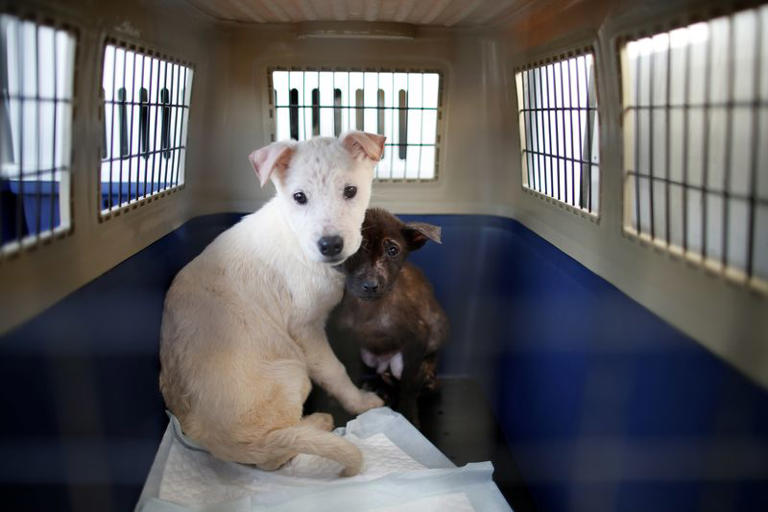
Rescued dogs are seen as they wait for transport, at a dog meat farm in Wonju, South Korea. credit: REUTERS/Kim Hong-Ji

This time, the government has said the proposed ban would give the industry a three-year grace period to transition out of the trade, as well as provide the maximum possible financial support for those affected.

With the backing of the public, and bipartisan support in parliament, there are signs that the ban could soon become law.

TIME FOR CHANGE

The agriculture ministry declined to give details about the size of the industry, but the Korean Association of Edible Dogs, says far more farms and restaurants than those cited by the government will be affected.

The association said 3,500 farms raising 1.5 million dogs and 3,000 restaurants will have to shut down, almost twice the numbers stated by officials.

Nam Sung-gue who has run a restaurant selling dog meat boshintang, or “restoring” soup, for the past 30 years, said the ban was unfair, even though his business is fast declining.

“If they try to ban the food that people have eaten for a long time, that is a wrong kind of law, a law that takes away the freedom to choose what we eat,” he said.

Many opponents of the ban blame it on First Lady Kim Keon Hee, a vocal critic of dog meat consumption who along with her husband President Yoon Suk Yeol has six dogs.

South Korea President Yoon Suk-yeol and first lady Kim Keon-hee invite the newest member of the presidential family Saeromi, a retired guide dog, after adopting her from the Samsung Guide Dog School in Yongin, Gyeonggi. [PRESIDENTIAL OFFICE]

Asked about Kim’s influence, an official at the president’s office said: “Both in the country and abroad there is support and consensus, as well as from the opposition party.”

An Byung-gil, member of parliament for the ruling party who is the main sponsor of the bill, also said the time was ripe for change. “Even though something may be part of tradition, what needs to be changed has to be changed,” he said.

WHAT YOU CAN DO TO HELP ANIMALS IN NEED

You can support our work by donating as little as £5 – It only takes a minute but it can last a lifetime for an animal in need.

PLEASE CLICK HERE TO HELP ANIMALS IN NEED

Everyone who donates will receive a Certificate of Appreciation as a thank you for helping animals in need.

The Mission of Protect All Wildlife is to prevent cruelty and promote the welfare of ALL animals. We believe EVERY animal should be treated with respect, empathy, and understanding. We raise awareness to protect and conserve wild, captive, companion and farm animals.

It is vital that we protect animals against acts of cruelty, abuse, and neglect by enforcing established animal welfare laws and, when necessary, take action to ensure that those who abuse animals are brought to justice.

Protect All Wildlife are involved in many projects to protect animals’ rights, welfare, and habitats. Money contributed to Protect All Wildlife supports ALL of our worthy programmes and gives us the flexibility to respond to emerging needs. Your donations make our work possible.

South Korea Plans To BAN Eating Dogs By 2027: Animal Groups Praise ‘Historic Announcement’ As ‘A Dream Come True’.

South Korea aims to ban eating dog meat and put an end to the controversy over the ancient custom amid growing awareness of animal rights, a ruling party policy chief said on Friday.

The Korean practice of eating dog meat has drawn criticism from overseas for its cruelty but there has also been increasing opposition at home, particularly from the younger generation.

“It is time to put an end to social conflicts and controversies around dog meat consumption through the enactment of a special act to end it,” Yu Eui-dong, policy chief of the ruling People Power Party, said at a meeting with government officials and animal rights activists.

The government and ruling party would introduce a bill this year to enforce a ban, Yu said, adding that with expected bipartisan support, the bill should sail through parliament.

Agriculture Minister Chung Hwang-keun told the meeting the government would implement a ban quickly and provide the maximum possible support for those in the dog meat industry to close their businesses.

Rescue workers from Humane Society International rescue a dog at a dog meat farm in Wonju, South Korea. Credit: REUTERS/Kim Hong-Ji

First lady Kim Keon Hee has been a vocal critic of dog meat consumption and, along with her husband, President Yoon Suk Yeol, has adopted stray dogs.

Anti-dog meat bills have failed in the past because of protests by those involved in the industry, and worry about the livelihoods of farmers and restaurant owners.

The proposed ban will include a three-year grace period and financial support for businesses to transition out of the trade.

Eating dog meat has been an age-old practice on the Korean peninsula and is seen as a way to beat the summer heat.

But it is much less common than it used to be in South Korea, though it is still eaten by some older people and served in certain restaurants.

Animal rights groups welcomed the prospect of a ban. “A dream come true for all of us who have campaigned so hard to end this cruelty,” Humane Society International said in a statement.

There are about dog 1,150 breeding farms, 34 slaughter houses, 219 distribution companies, and some 1,600 restaurants serving dog, according to government data.

A Gallup Korea poll last year showed 64% opposed dog meat consumption. The survey found only 8% of respondents had eaten dog within the past year, down from 27% in 2015.

Reporting by Ju-min Park (Reuters).

WHAT YOU CAN DO TO HELP ANIMALS IN NEED

You can support our work by donating as little as £5 – It only takes a minute but it can last a lifetime for an animal in need.

PLEASE CLICK HERE TO HELP ANIMALS IN NEED

Everyone who donates will receive a Certificate of Appreciation as a thank you for helping animals in need.

The Mission of Protect All Wildlife is to prevent cruelty and promote the welfare of ALL animals. We believe EVERY animal should be treated with respect, empathy, and understanding. We raise awareness to protect and conserve wild, captive, companion and farm animals.

It is vital that we protect animals against acts of cruelty, abuse, and neglect by enforcing established animal welfare laws and, when necessary, take action to ensure that those who abuse animals are brought to justice.

Protect All Wildlife are involved in many projects to protect animals’ rights, welfare, and habitats. Money contributed to Protect All Wildlife supports ALL of our worthy programmes and gives us the flexibility to respond to emerging needs. Your donations make our work possible.