Zoos: The Great Education And Conservation Myth

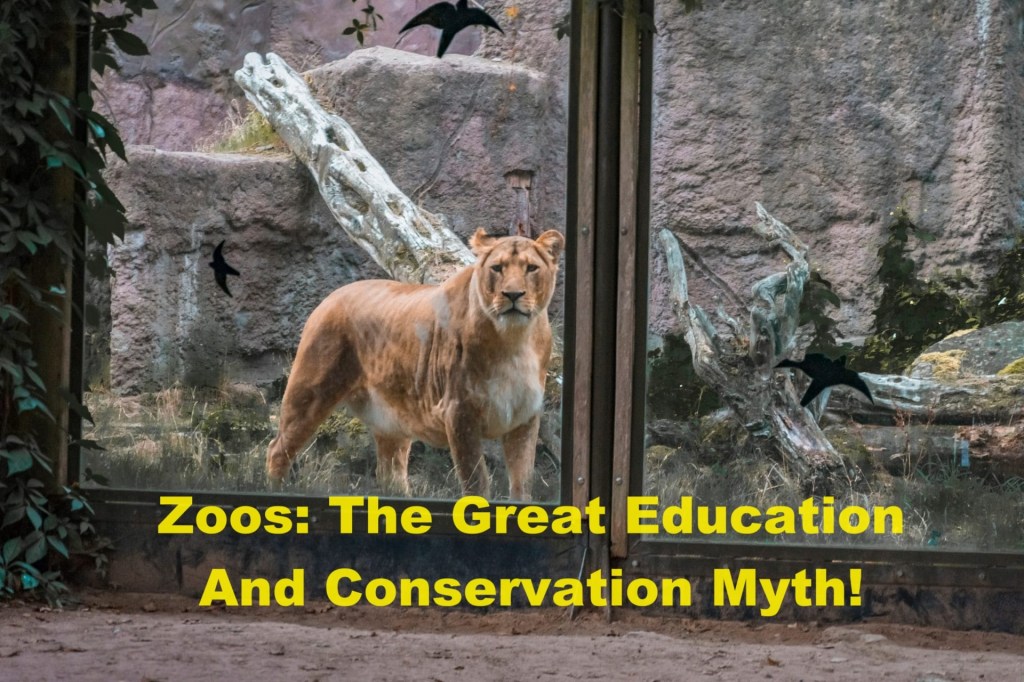
Zoos: the great education and conservation myth!

Here, Andy Davidson lists the hard-hitting facts, revealing what zoos really spend their money on, and how you’re better off spending yours elsewhere if you care about conservation. 

If you’re planning to a visit a zoo this weekend, ask yourself this question. How much of your ticket fee is being used for conservation? Let’s say you pay £15 for your ticket. You may be surprised to hear that the answer is as little as 45p to £1. 

Zoo expenditure is vastly different to the expenditure of conservation organisations based in the wild. For example, Chester Zoo spent £40 million on the construction of ‘the islands’, an expansion of more enclosures to the zoo site. Other Western zoos over a ten-year period have spent £400 million on updating enclosures for a mere 200 elephants. 
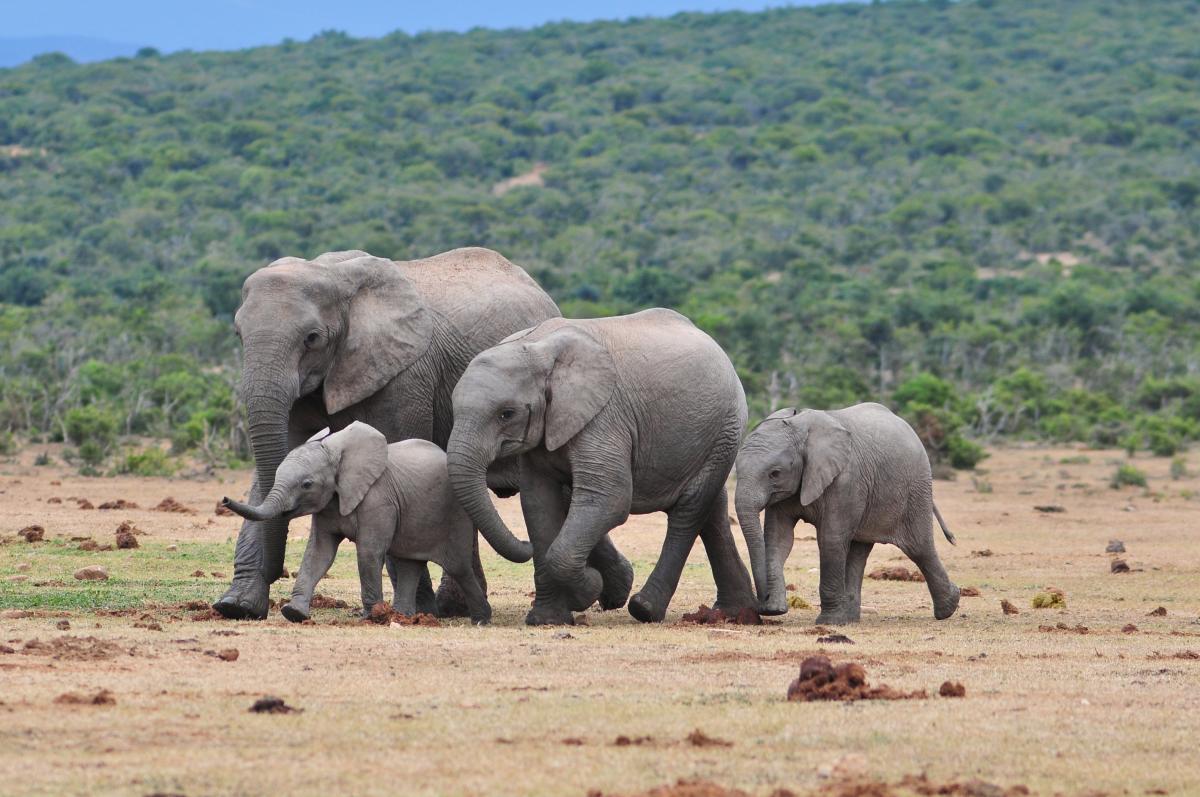
family of elephants in the wild

The Kenya Wildlife Service (KWS) and South African National Parks are conservation organisations that protect animals in their natural habitats.  KWS has an annual budget of £13-14 million with which they protect 2.6 million hectares of that country’s National Parks. On that land are 33,000 Elephants, 2200 Lions and many vitally important habitats that are home to thousands of species of both plant and animal. The annual budget for the South African National Parks is £58 million and this consists of 19 national parks which make up 6% of the total land of South Africa. Just one of these parks houses 600 elephants. 

The money used by Western zoos to update elephant enclosures for 200 Elephants could have kept Kenya Wildlife Service going for 14 to 15 years.

Sound shocking? It is. That’s why the chief consultant to the UN Great Ape Survival Project said he was uneasy at the mismatch between lavish spending at zoos and the scarcity of resources available for conserving threatened species in the wild. 

Where Is Your Money Going? 

Since the 1800s, the zoo has not fundamentally changed. Well known and entertaining animals such as Elephants, Chimps and Giraffes are front and centre and baby animals give zoos a boost in visitors.

The main driver for zoos is boosting public visitation, a goal that has far reaching implications into all zoo management decisions. Conservation, research and education are not their primary goals, making it impossible to term zoos as research or education organisations. In fact, zoos are places of entertainment, where animal welfare is governed by financial feasibility and entertainment value.  

90% of species encaged by European zoos are not threatened from extinction. Over 90% of zoo animals are born in captivity.  These animals are then paired across zoos to ensure genetic diversity. Gender cannot be predicted and genes are sometimes over represented leading to what the zoos call a ‘surplus of animals’. 3000-5000 of these animals in European zoos are killed each year. On the 8th of February 2014, Copenhagen Zoo (in)famously killed Marius, a healthy 18-month-old male Giraffe.

Afterward, zoo officials performed a three-hour-long demonstration of how to butcher a giraffe before a large crowd of visitors, including many children. The meat was then fed to the zoo’s four Lions. The four Lions, including two young Lions, were killed to make way for a new male. The Giraffe was killed because she could not produce anymore young.

Marius, a healthy male Giraffe, lies dead after he was euthanized at Copenhagen Zoo. Visitors, including children, were invited to watch while the he was dissected. Photo: Peter Hove Olesen.

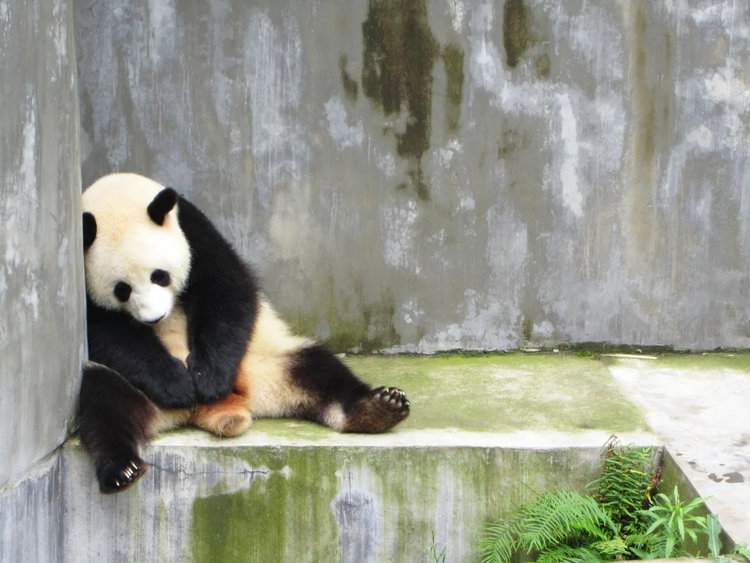
Even for threatened species such as Pandas, breeding campaigns rarely work. 400 Pandas have been bred by zoos, yet only five have been released into the wild: three survived. It’s not hard to see that captive breeding is not feasible.  Animals not brought up in the wild are less likely to survive there if reintroduced.  For example, captive populations of Red Junglefowl (wild ancestors of chickens) differ significantly in response to predators after just a handful of generations in captivity.  And, a 2008 study by the University of Exeter found that the odds of animals such as Tigers and Wolves surviving freedom is only 33 percent. Animals in captivity do not usually have the natural behaviours needed for success in the wild.

But it’s not just endangered species that are being bred. A 2014 analysis of the European Endangered Species Breeding Programmes, conducted by the European Association of Zoos and Aquaria, showed that half of the animals being bred were not classed as endangered in the wild, while 25% were not threatened at all. In fact, all zoos only accommodate a tiny fraction of the 22,000 + species threatened with extinction.

With only 3% of budgets being spent on conversation projects, we can see why wildlife continues to disappear. Zoos show little interest in tackling the root causes of wildlife destruction. Species-rich habitats are being converted to pasture and feed crops as the human appetite for meat swells. Many of the places expected to see the greatest shift in land use from forest to livestock are in 15 ‘megadiverse’ countries, which harbour the largest number of species. As wildlife disappears, zoos ignore the problem. Instead, they contribute to it by feeding millions of customers meat. 

The Education Myth

Zoos rebranded in the 1970s as the public became informed to the suffering of zoo animals. UK legislation in the form of 1981 Zoo Licensing Act forced zoos to promote ‘public education and awareness in relation to conservation’. Advocates will say zoos inspire the next generation of conservationists.

This has been categorically debunked by a number of studies, while little information is required to meet the standards of legislation. A 2014 academic study in the Conservation Biology Journal surveyed 2800 children following visits to London Zoo. 62% of the 2800 children were deemed to show no change in learning or, worse, experienced negative learning during their trip to the zoo. It was concluded that the zoo’s impact on children’s belief in their ability to actively do something about conservation was ‘weak’.

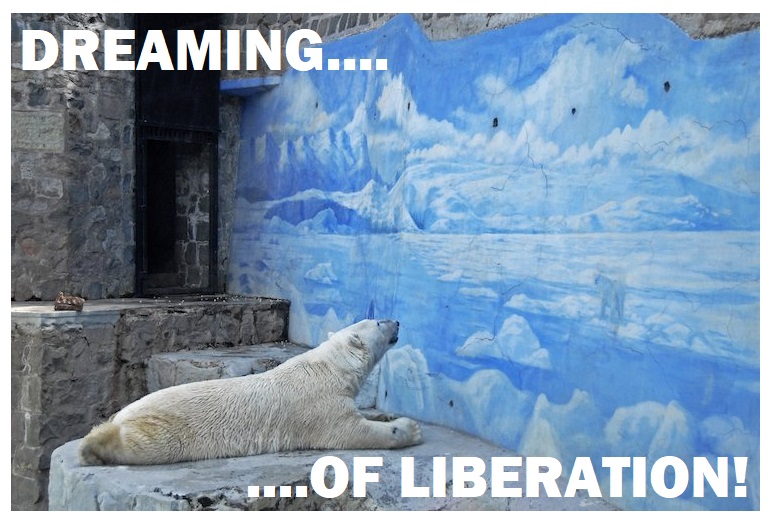
In what way could this sad image of a Bear be considered educational?

Do children need to see the animals up close to learn about them?  Many children seem to have an encyclopedic knowledge about dinosaurs, far more so than Lions and Tigers. Perhaps the general public wish to see exotic animals up close as we attach closeness to care. But why, then, do they tap on the windows and show disappointment when the Lions are asleep? This is a misplaced, harmful interest, surely. 

A Lion Is Taunted By Zoo Visitors At Animal City In Lebanon

In reality there is nothing sufficient in the mainstream that educates the public about animals and their conservation. Zoos, school, television – they all fail in this respect. The evidence is very clear: the World Wildlife Fund report that the planet’s fish, bird, mammal and reptile populations plunged 52 per cent from 1970 to 2010.  That’s a stunning 52% of all fish, bird, mammal and reptile life lost in 40 years.

Human encroachment is destroying wildlife, but zoos do not consider that information entertaining and, as mentioned, entertainment is the only real driver of ticket sales. Paul Boyle, senior vice president for conservation and education at the Association of Zoos and Aquariums, says “People leave their homes, and the intent is not to save animals in Africa—it’s to have a family outing.”

The Imprisonment Of Animals

An Oxford University study based over four decades of observing animals in captivity and in the wild found that animals such as Polar Bears, Lions, Tigers, Cheetahs show the most evidence of stress and/or psychological dysfunction in captivity. In the same study, 80% of carnivores show abnormal repetitive behaviour. This is a major problem for zoos as these animals are the most popular with visitors.

There are approximately 3200 Tigers left in the wild. In the United States alone, there are over 5000 Tigers in captivity.  This is not the result of successful breeding programmes. These Tigers are being born in captivity and they die in captivity. They are the star attraction. It’s hard to imagine a zoo without a Tiger. One particular zoo in the US houses dozens of Tigers. They let visitors handle cubs and have their picture taken while talking up their conservation programmes, despite the fact that their average Tiger enclosure is about 18,000 times smaller than the animals’ natural roaming range. It is simply impossible for these poor Tigers to express instinctive behaviour.  

Tourists watch a Tiger cub play with a stuffed toy during a petting and photo opportunity at Myrtle Beach Safari. Photo Credit: Steve Winter, Nat Geo Image Collection.

In two extensive studies, it was found that the lifespan of Elephants is more than halved by living in zoos.  A government-funded study of Elephants in UK zoos found that 54% of the Elephants showed behavioural problems during the daytime. In 2016 18 African Elephants, a species designated as threatened within their natural habitats in Swaziland, were captured and transported to three zoos in the US to entertain the public there.

Despite the best intentions of zoo employees to create a happy environment for an animal, zoos are fundamentally unable to recreate the wild setting. Cheetahs cannot run at maximum speed, Elephants cannot walk hundreds of miles (except in circles), birds cannot migrate and fly long distances. Animals are unable to hunt, choose who to spend time with and find their suitable home. Another problem is privacy and noise levels. Human interaction is not normal and constant noise can cause problems. Animals often become depressed and obsessive.

Sometimes zoos are nothing but cages on concrete. Here in the UK, zoos have higher welfare standards, yet its employees and its visitors are still blissfully ignorant to the damage we cause to them. Zoos are well-versed in spreading misinformation and exaggerating the small areas of conservation they achieve to placate the public, ensuring visitor numbers stay high.

Today, the decisions relating to the conservation of animals fall under the power of Western organisations and trusts, not with local communities in Africa or the Amazon. So not only does the money firmly stay within the West, but so does the decision making process. Wildlife can only be saved by empowering their protection in their natural habitats.

If you really care about putting an end to poaching, saving wildlife and keeping wild animals where they belong then pound for pound, your donation should be going to conservation organisations that protect animals in their natural habitats. You won’t receive anything in return and you will have to find somewhere else to visit on your Saturdays, BUT you will be directly saving wild animals. They are the FUTURE: zoos are the PAST.

An Original Article By Andy Davidson, Vegan Society.

Stereotypic behaviors, also known as “zoochosis” are performed sometimes for hours each day, sometimes endlessly. It is unnatural & indicates underlying stress. Credit: In Defence Of Animals

WHAT YOU CAN DO TO HELP WILDLIFE

You can support ‘Protect All Wildlife’ many projects by donating as little as £5 – It only takes a minute but it can last a lifetime for an animal in need. Please donate below.

Donate Here: Please Help Animals In Need

Everyone who donates will receive a Certificate of Appreciation as a thank you for helping animals in need.

The Mission of Protect All Wildlife is to prevent cruelty and promote the welfare of ALL animals.

We believe EVERY animal should be treated with respect, empathy, and understanding. We raise awareness to protect and conserve wild, captive, companion and farm animals.

It is vital that we protect animals against acts of cruelty, abuse, and neglect by enforcing established animal welfare laws and, when necessary, take action to ensure that those who abuse animals are brought to justice.

Protect All Wildlife are involved in many projects to protect animals’ rights, welfare, and habitats. Money contributed to Protect All Wildlife supports ALL of our worthy programmes and gives us the flexibility to respond to emerging needs. Your donations make our work possible.
Donate Here: Please Help Animals In Need

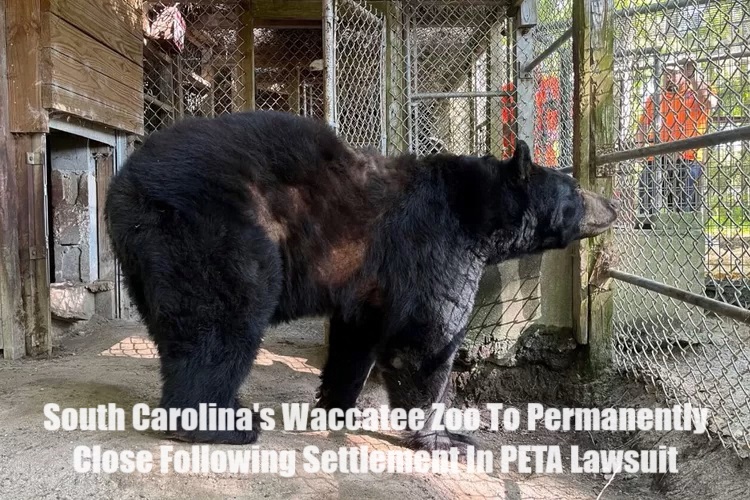
South Carolina’s Waccatee Zoo To Permanently Close Following Settlement In PETA Lawsuit

A Bear removed from the Waccatee Zoo.  PHOTO: PETA

In its complaint, the animal rights organization described Waccatee Zoo as “one of the worst roadside zoos in America”

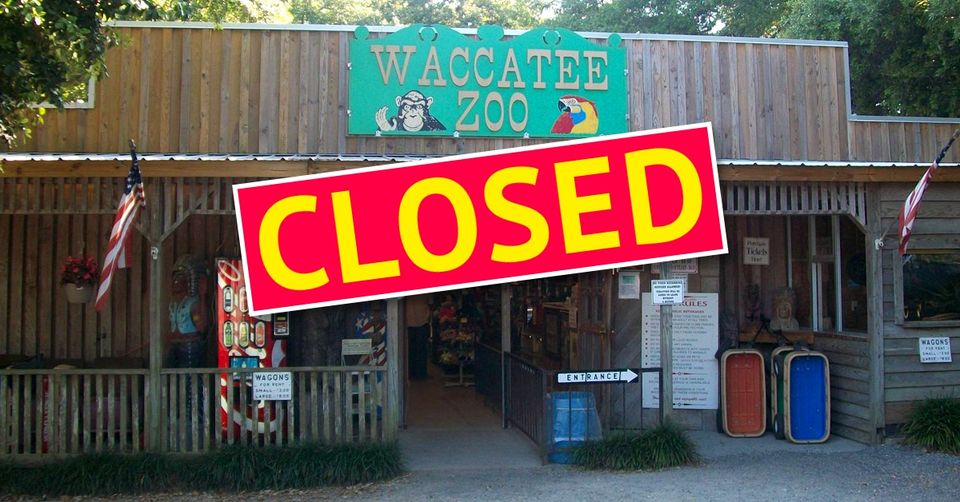
A South Carolina roadside zoo will permanently close following the settlement of a federal lawsuit brought on by People for the Ethical Treatment of Animals (PETA).

In a press statement Thursday, the animal rights organization said the Waccatee Zoo in Horry County will be permanently closed. Additionally, as part of the settlement, per PETA, the operators of the South Carolina facility are banned from owning or exhibiting wild or exotic animals, breeding domestic animals, exploiting domestic animals for profit, and working or volunteering at other roadside zoos.

In its lawsuit filed under the federal Endangered Species Act and South Carolina’s public nuisance law in April 2022, PETA described Waccatee Zoo as “one of the worst roadside zoos in America.” The complaint alleged the zoo’s operators confined and exhibited more than 460 animals and that the facility’s conditions deprived them of “adequate veterinary care, shelter, food, and water.”

An attorney for the Waccatee Zoo and the defendants, Reese Boyd III, told the Myrtle Beach Sun News that the lawsuit has been settled and the facility will be shut down. He said that his client’s agreement to the settlement terms was not an admission “to the exploitation of animals in their care” – adding that a number of PETA’s accusations were “factually untrue,” per the newspaper.

PETA also said in the lawsuit that it regularly received complaints about Waccatee from zoo visitors.

“Day after day, animals at Waccatee sway and pace back and forth—unnatural behaviors that signify the animals’ needs are not being met,” read PETA’s lawsuit. “Many animals experience negative stress due to small, insufficiently enriched spaces that provide little to do, offer inadequate opportunities to socialize, and are affirmatively dangerous.”

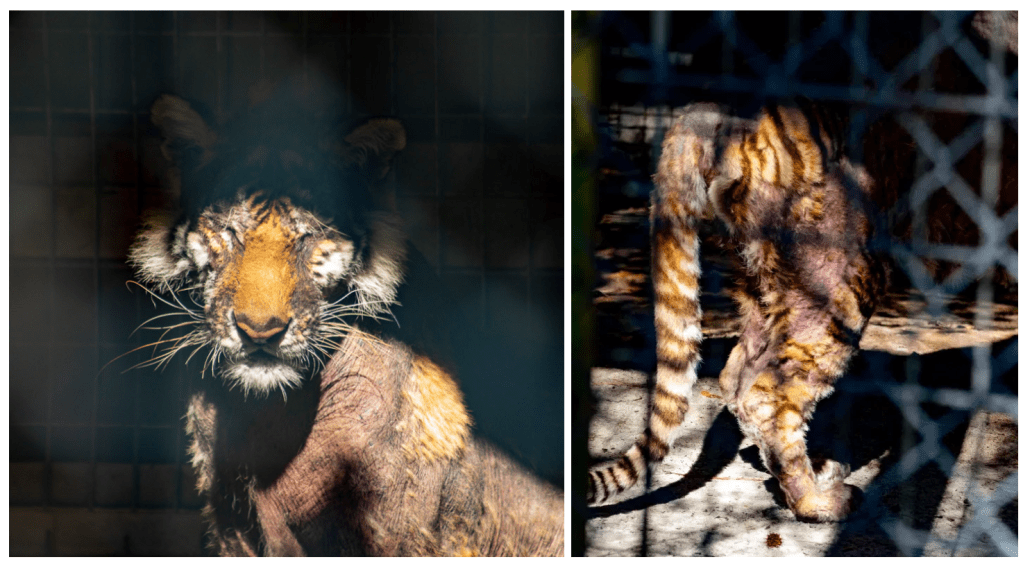
The lawsuit cited the case of Lila, a tiger who either died in late 2020 or 2021, saying that she “became so emaciated that much of her skeleton—including her vertebrae, scapula, shoulder, hip, and other joints—was visible through her skin.” The complaint also alleged that other animals at the zoo experienced hair loss and emaciation—adding that “isolated, frustrated, and bored animals exhibit alarming and repetitive behavior, indicating that they are experiencing psychological distress.”

Emaciated Lila suddenly disappeared resulting in PETA asking for a necropsy report.

Lila passed away after a fall from old age, zoo owner Jeff Futrell said.

According to a letter PETA sent to Waccatee Zoo on Feb. 25, the organization wanted answers to the whereabouts of Lila after she was the subject of a PETA campaign because of her ill health.

“After months of wasting away, losing fur, and turning in endless circles in her dismal cage, Lila has disappeared—and PETA is asking whether she died, in pain and in the cold, and if her death is being covered up,” says PETA Foundation Associate Director of Captive Animal Law Enforcement Michelle Sinnott. “Nothing can undo Lila’s suffering, and PETA is calling on Waccatee Zoo to release the other big cats before they suffer as she did.”

And now, PETA is asking the owners of the zoo to release the necropsy report.

In a press statement, Brittany Peet, PETA’s general counsel for captive animal law enforcement, responded to the settlement: “This victory blocks Waccatee’s operators from ever again mistreating wild animals as they did for decades. PETA is delighted to see the survivors thriving in their new sanctuary home and will continue to ask everyone to help us advocate for all animals still trapped in roadside zoos by never patronizing such operations.

In May, PETA and The Wild Animal Sanctuary (TWAS) rescued nine remaining animals left at the Waccatee Zoo. Among the animals retrieved were a llama, two North American black bears, and six emus. PETA said the rescued animals would head to a TWAS sanctuary in Colorado.

WHAT YOU CAN DO TO HELP WILDLIFE

You can support ‘Protect All Wildlife’ by donating as little as £1 – It only takes a minute but it can last a lifetime for an animal in need. Please donate below.

Everyone who donates will receive a Certificate of Appreciation as a thank you for helping animals in need.

The Mission of Protect All Wildlife is to prevent cruelty and promote the welfare of ALL animals.

We believe EVERY animal should be treated with respect, empathy, and understanding. We raise awareness to protect and conserve wild, captive, companion and farm animals.

It is vital that we protect animals against acts of cruelty, abuse, and neglect by enforcing established animal welfare laws and, when necessary, take action to ensure that those who abuse animals are brought to justice.

Protect All Wildlife are involved in many projects to protect animals’ rights, welfare, and habitats. Money contributed to Protect All Wildlife supports ALL of our worthy programmes and gives us the flexibility to respond to emerging needs. Your donations make our work possible.
In What Way Can This Be Considered Educational: Polar Bears In The Zoo

Sadly, unhealthy and dreary polar bear enclosures such as this still exist. Chile’s only polar bear “Taco” died in 2015 at the age of 18 at the National Zoo in Santiago. For years, activists protested its captivity, sometimes with blockades and burning barricades. [Photo by Aldo Fontana]

In urban areas of the western hemisphere, polar bears have lived in our midst since the Middle Ages—a result of our fascination with these charismatic carnivores. As early as 1252, Henry III of England kept a muzzled and chained polar bear, which was allowed to catch fish and frolic about in the Thames. The first undisputed documentation of polar bears in Europe shows that the bears arrived by way of Greenlandic Norse traders and from Iceland, where sea currents still sometimes maroon them. Viking entrepreneurs distributed them to royalty throughout Europe, who kept them in ostentatious menageries or passed them on as gifts to grease diplomatic gears and careers.

Beginning in 1693, the first King of Prussia, Frederick I, kept a polar bear and other large mammals for public amusement in a baroque-style hunting enclosure inspired by Roman arenas. These rare animals were too valuable to be killed but, defanged and de-clawed, were pitted against each other in faux fights. During medieval times in England, entertainers displayed all sorts of animals at carnivals and fairs. The traveling menagerie, which derived from the processions of Europe’s ambulatory monarchs and their entourages, first took to the roads at the turn of the eighteenth century. In a bid for respectability, the owner of one bragged he was doing “more to familiarize the minds of the masses of our people with the denizens of the forest than all the books of natural history ever printed.”

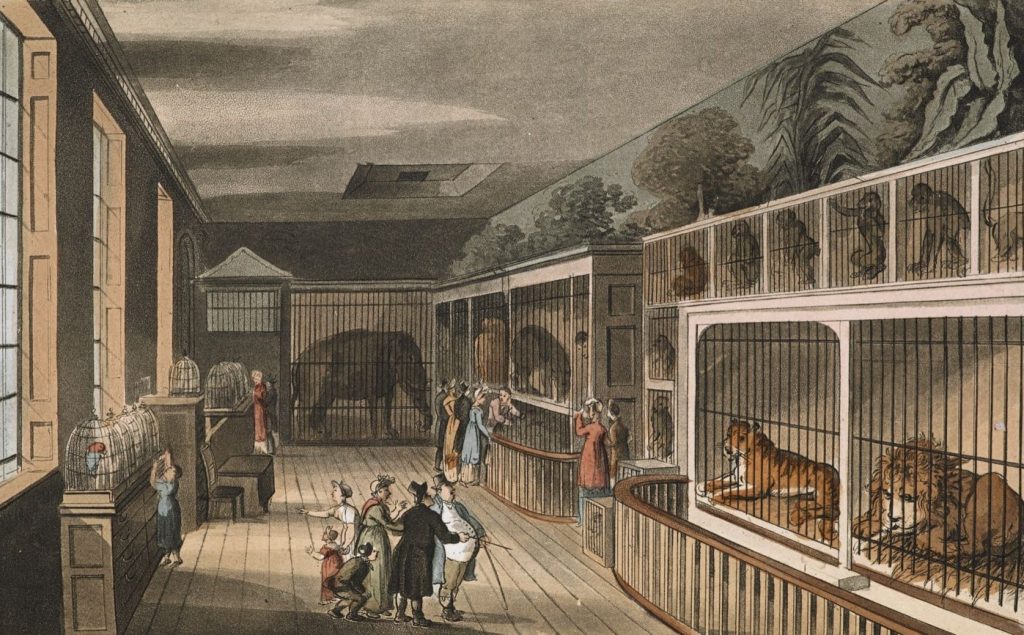
Around this same period of time, a burgeoning middle class and expeditions to the Americas, Asia, and Africa, as well as new developments in science and philosophy, brought about changes in how polar bears were displayed. Animal collections in Europe—until then largely a privilege of nobility—increasingly welcomed the public. Featured in these publicly accessible collections, polar bears drew a good deal of attention, just as they did in medieval wildlife collections or “menageries” (such as the one in the Tower of London).

The Royal Menagerie: An illustration of how the zoo within the Tower looked in 1816

Nobody contributed more to the popularity of captive polar bears or the looks of modern zoos than Carl Hagenbeck. In 1848, Carl Hagenbeck Sr., a Hamburg fishmonger, exhibited six seals he’d received as bycatch from fishermen before selling the seals at a handsome profit. At age fifteen, Carl Hagenbeck Jr. took over what would become Europe’s most famous animal-trade business. He soon supplied zoos, menageries, and wealthy individuals, including the Kaiser. In his early twenties, Hagenbeck already ranked among Europe’s top dealers in exotics. With a nose for opportunity, he branched out into the budding entertainment industry, mounting “ethnological” and large carnivore shows as well as a circus.

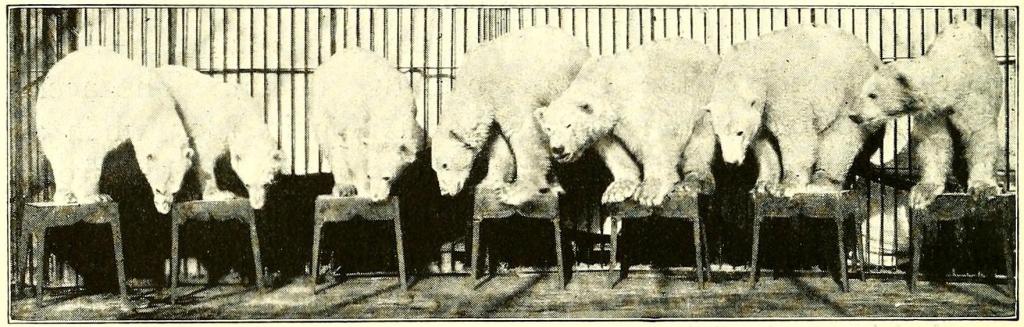
Some of the Polar Bears abducted by the Hagenbecks faced a fate worse than zoo captivity. These seven polar bears were forced to become performers by Carl’s relative Wilhelm Hagenbeck. 

From their very beginnings as cultural institutions, zoos have tried to balance entertainment and education. Today, with climate change and habitat loss from development threatening the polar bear’s natural habitat, many zoos have added conservation to their mission, contributing to captive breeding programs and scientific research.

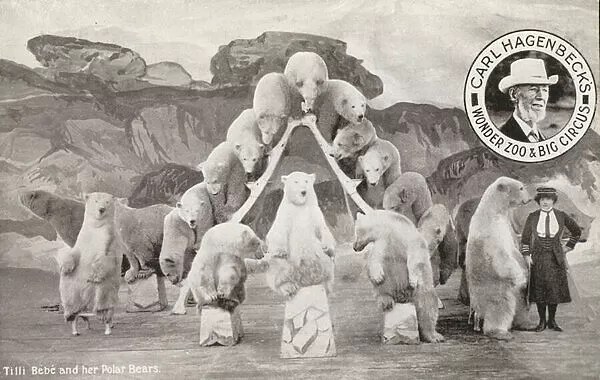
Austrian circus performer Mathilde Rupp (stage name Tilly Bébé) and her Polar Bears at Carl Hagenbeck’s Wonder Zoo in 1918.

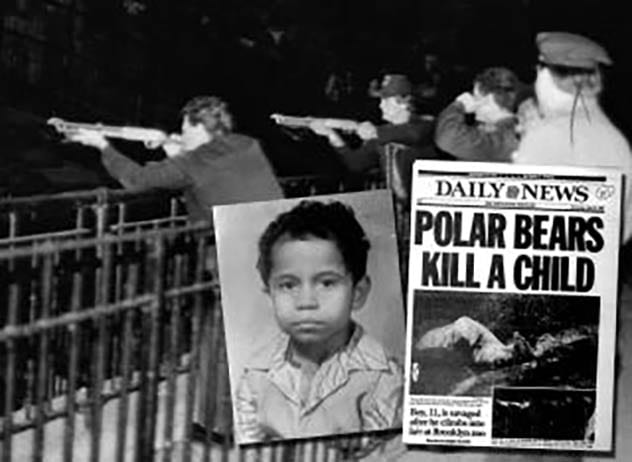
The urge to be close to the wildness (fettered as it may be) that cannot be bred out of zoo polar bears, or perhaps a desire to better get to know these ursine celebrities, has caused numerous incidents at zoos. Such trespassing is not a recent phenomenon. In 1891, a female servant from Bavaria, Karoline Wolf, climbed down a rope into the Frankfurt Zoo’s bear pit—after undressing and neatly folding her clothes—in order to be “eaten alive by a white bear.” People will forever seek operatic ways to end their lives, but accidental zoo maulings are telling because of what these incidents reveal about attitudes toward the animal. In 1987, two polar bears at the Brooklyn Zoo dragged into their den and then killed eleven-year-old Juan Perez, who had entered the enclosure after hours on a dare. The boy thought the bears were slow and afraid of people and water. After invading their space, he provoked the female, throwing bottles and sticks. Police, who suspected that more kids were in danger, riddled both bears with shotgun slugs and pistol bullets.

On May 19, 1987, 11-year-old Juan Perez and two of his friends were visiting the Prospect Park Zoo in Brooklyn, New York, after the zoo had closed for the day.

The old animal magic, that attraction of people to bears, remains strong. Drawn like foxes to a bear kill, we take risks to breach barriers that once, long ago, did not exist. Juan Perez’s death and similar cases recall an Inuit boy’s test of courage and coming-of-age rite: his first polar bear kill. The crucial difference, of course, is the cultural context. Whereas Inuit children grew up listening to their elders, respecting the animal, observing bear habits and how bears are hunted, young Juan had never been inducted into the White Bear’s ways.

A Polar Bear riding a motorcycle circa 1960. (Photo by John Cuneo)

——–((((((()))))))——–

WHAT YOU CAN DO TO HELP WILDLIFE:

You can support ‘Protect All Wildlife’ by donating as little as £1 – It only takes a minute but it can last a lifetime for an animal in need. Please donate below.

Everyone who donates will receive a Certificate of Appreciation as a thank you for helping animals in need.

The Mission of Protect All Wildlife is to prevent cruelty and promote the welfare of ALL animals.

We believe EVERY animal should be treated with respect, empathy, and understanding. We raise awareness to protect and conserve wild, captive, companion and farm animals.

It is vital that we protect animals against acts of cruelty, abuse, and neglect by enforcing established animal welfare laws and, when necessary, take action to ensure that those who abuse animals are brought to justice.

Protect All Wildlife are involved in many projects to protect animals’ rights, welfare, and habitats. Money contributed to Protect All Wildlife supports ALL of our worthy programmes and gives us the flexibility to respond to emerging needs. Your donations make our work possible.

LIVING HELL: ‘World’s Saddest Lion’ Looking Like A Walking Skeleton In Enclosure At Chinese Zoo

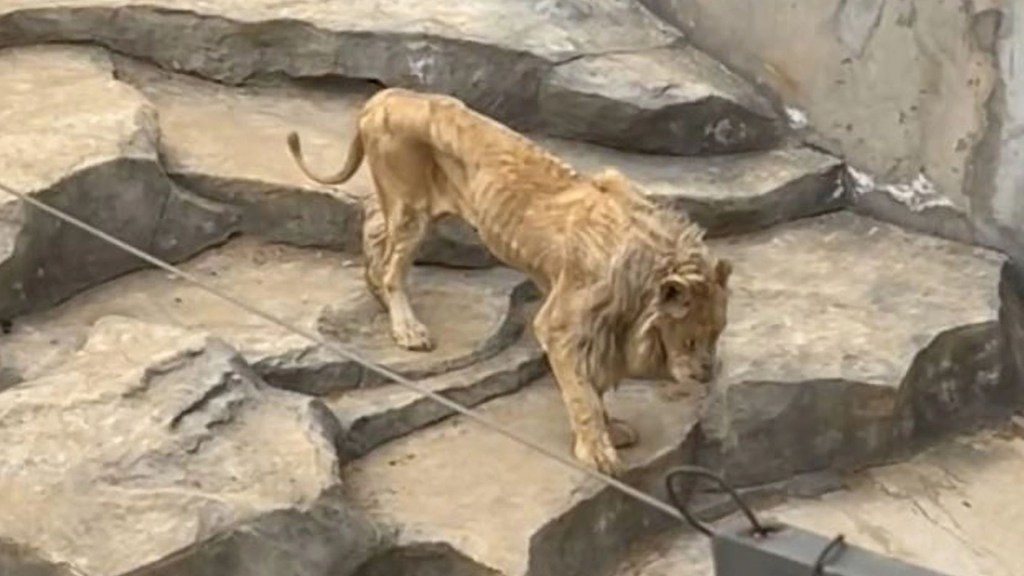
A frail Lion that looks like a walking skeleton has become too weak to chew.

Shocking footage showed the skinny lion walking through its enclosed cage 

The Lion, called Ala, is so emaciated he can barely walk through his enclosure at the Jinniu Lake Safari Park in Nanjing, China with outraged social media users accusing the zoo of inflicting suffering on the lion and starving their animals.

Shocking footage has emerged of a starving lion which is barely more than skin and bones at a Chinese zoo.

Many have been left furious and disturbed by the sight of the big cat who looks so malnourished it is struggling to carry out basic functions such as walking.

In the horrifying video viewers can see the Lion’s ribs because it is so thin.

The clip – shared later on Douyin, China’s version of TikTok – shows the ultra-skinny Lion wobbling down a walkway.

The lion is so frail he can barely walk

It caused outrage among viewers who accused the zoo of not taking proper care of the feeble feline.

One user said: ‘This is too much suffering. If you can’t afford to feed it, send it to a different zoo that can.

‘Why let him suffer? It should have been left living in nature.’

Meanwhile, another added: ‘This zoo is too much, starving the lions like this.’

Officials at the zoo later attributed the lion’s shocking appearance to its old age because he can no longer chew his food. 

They claimed that the 25-year-old big cat would be 80 if he was a human.

Officials say he is fed a special diet of liquid protein and small cuts of meat and is watched over by specially trained vets and keepers in a private cage.

The zoo added: ‘Usually, we let it out for a walk in the morning or evening.’

Despite the concerning footage, Jinniu Lake Safari Park is ranked in the top five family-friendly things to do in Nanjing on Trip.com.

It has an overall rating of 4.2 out of 5 but there are also hundreds of negative reviews, with some visitors citing the zoo’s ‘poor management’ and others complaining of the huge costs.

What you can do to help wildlife:

You can support ‘Protect All Wildlife’ by donating as little as £1 – It only takes a minute but it can last a lifetime for an animal in need. Please donate below.

Everyone who donates will receive a Certificate of Appreciation as a thank you for helping animals in need.

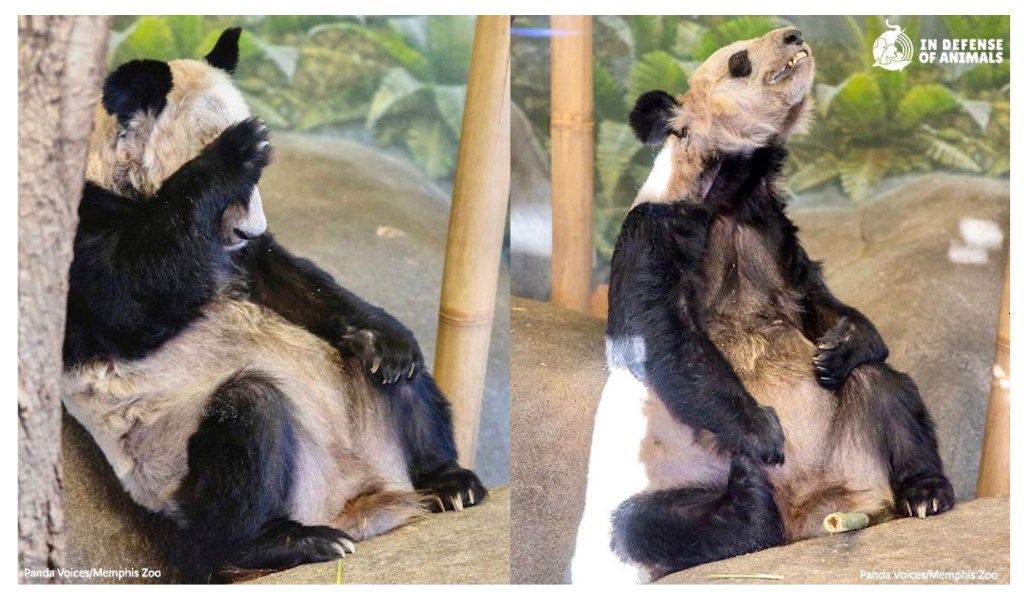
Victory! Suffering Giant Pandas YaYa & LeLe At The Memphis Zoo Will Finally Be Sent To A Sanctuary In China

Suffering: Giant Pandas YaYa And LeLe At Memphis Zoo Credit: Panda Voices

UPDATE! A huge victory for Giant Pandas YaYa, 22, and LeLe, 24, who will be sent back to their homeland of China, according to a statement from the Memphis Zoo. In Defense of Animals and Panda Voices, who have been lobbying for the pandas’ release for nearly two years, announced the news today.

“After far too many years of suffering in a grossly inappropriate zoo exhibit, YaYa and LeLe will finally get improved care at a specialized panda refuge in their homeland,” said Brittany Michelson, Captive Animals Campaigner for In Defense of Animals.

“We applaud the Memphis Zoo and Chinese authorities for making the ethical decision to return the pandas to China once the loan contract ends in April 2023. We thank Billie Eilish and our many thousands of supporters worldwide for helping us encourage the zoo to do the right thing,” continued Michelson. “We are delighted to celebrate this momentous victory. Animals suffer tremendously in zoos, and we hope this will prompt all zoos to put animals’ needs first and release them to accredited sanctuaries.”

YaYa and LeLe have been suffering at the Memphis Zoo since 2003. The pandas are visibly distressed and malnourished and spend their days pacing or sleeping, clearly bored in their dirty, small enclosure. YaYa has a chronic skin condition and LeLe has significant teeth issues resulting in broken molars.

“We are overwhelmed with joy at the news of YaYa and LeLe returning home to China!” said Taciana Santiago of Panda Voices.

“We thank the Memphis Zoo for allowing this to happen and hope they provide the pandas the conditions they need to be fit to endure the long travel. We will continue to monitor their situation until we are sure they are in a suitable environment,” continued Santiago. “We look forward to seeing them live a life of retirement and peace in China. Big thanks to In Defense of Animals and all of our supporters who stayed vigilant on this journey! King LeLe and Queen YaYa will soon be home!”

The campaign to free YaYa and LeLe was supported by singer Billie Eilish.

Thankfully, the loan contract between China and the Memphis Zoo is ending in April 2023 and they will be returning home.

How you can help us support those on the ground:

You can support animals in need by donating as little as £1 – It only takes a minute but it can last a lifetime for an animal in need.

Everyone who donates will receive a Certificate of Appreciation as a thank you for helping animals in need.

ZooSpeak: ‘Life’ In A Zoo Through The Eyes Of A Brown Bear

Brown Bear, Germany, 2008

~ 1 ~

I’m aware of what you are

and I’m also aware of what you’re

thinking. You’re a human being

~ 2 ~

I’m aware of what you are

and I’m also aware of what you’re

thinking. You’re a human being

and you are thinking I am something else

~ 3 ~

I’m aware of what you are

and I’m also aware of what you’re

thinking. You’re a human being

and you are thinking I am something else

put here for your entertainment.

~ 4 ~

I’m aware of what you are

and I’m also aware of what you’re

thinking. You’re a human being

and you are thinking I am something else

put here for your entertainment,

that makes it easier for you to ignore me.

~ 5 ~

I’m aware of what you are

and I’m also aware of what you’re

thinking. You’re a human being

and you are thinking I am something else

put here for your entertainment,

that makes it easier for you to ignore me

and the wire mesh that surrounds me.

~ 6 ~

I’m aware of what you are

and I’m also aware of what you’re

thinking. You’re a human being

and you are thinking I am something else

put here for your entertainment,

that makes it easier for you to ignore me

and the wire mesh that surrounds me;

the wire mesh that separates us.

~ 7 ~

I’m aware of what you are

and I’m also aware of what you’re

thinking. You’re a human being

and you are thinking I am something else

put here for your entertainment,

that makes it easier for you to ignore me

and the wire mesh that surrounds me;

the wire mesh that separates us,

and your way of thinking from mine.

Gordon Meade

ZOOSPEAK

Gordon Meade is a Scottish poet and animal advocate. His 10th book of poetry is called Zoospeak. It’s about the inhumane and appalling conditions for animals who live in zoos and other terrible places. He wrote it to accompany the photographs in Jo-Anne McArthur’s, Captive, a haunting book of photographs featuring animals in captivity.

This Is NO Life

If you are unfamiliar with Jo-Anne’s work, go to We Animals Media and take a look. It will change you.

Please read and share Gordon’s poems.

The Mission of Protect All Wildlife is to prevent cruelty, promote the welfare of ALL animals EVERYWHERE, and help END animal abuse.

Please support our work by donating ANY amount, large or small. It only takes a minute and your donations make it all possible. Thank you for your support.

Go back

Your message has been sent

Warning
Warning
Warning
Warning
Warning
Warning.